Is Saharan dust feeding the Amazon rainforest?
Yes. Dust blown across the Atlantic brings phosphorus to the Amazon’s nutrient-poor soils, roughly making up for what heavy rain washes away.
27.7 milliontons
The Sahara in northern Africa and the Amazon rainforest in South America seem to have nothing in common. One is a land of sand and rock where rain almost never falls; the other is the largest tropical rainforest on Earth. On a map, an entire ocean separates them.
Yet year after year, dust from the Sahara blows across the Atlantic and settles on the Amazon. And that dust appears to carry something the forest badly needs.
182 million tons a year
Scientists have measured this dust from space. NASA’s CALIPSO satellite fires pulses of laser light down at Earth and reads the reflections to work out how much dust is in the air, and at what height. Using seven years of CALIPSO data, from 2007 to 2013, a team led by Hongbin Yu, an atmospheric scientist at the University of Maryland who works at NASA’s Goddard Space Flight Center, estimated how much dust makes the crossing.
According to NASA’s 2015 announcement, winds carry an average of 182 million tons of dust a year past the western edge of the Sahara, at longitude 15°W. Some of it drops into the sea or is washed out by rain along the way, but when the plume reaches longitude 35°W, off the coast of South America, 132 million tons are still airborne. About 27.7 million tons fall over the Amazon basin, and some 43 million tons travel on to the Caribbean.
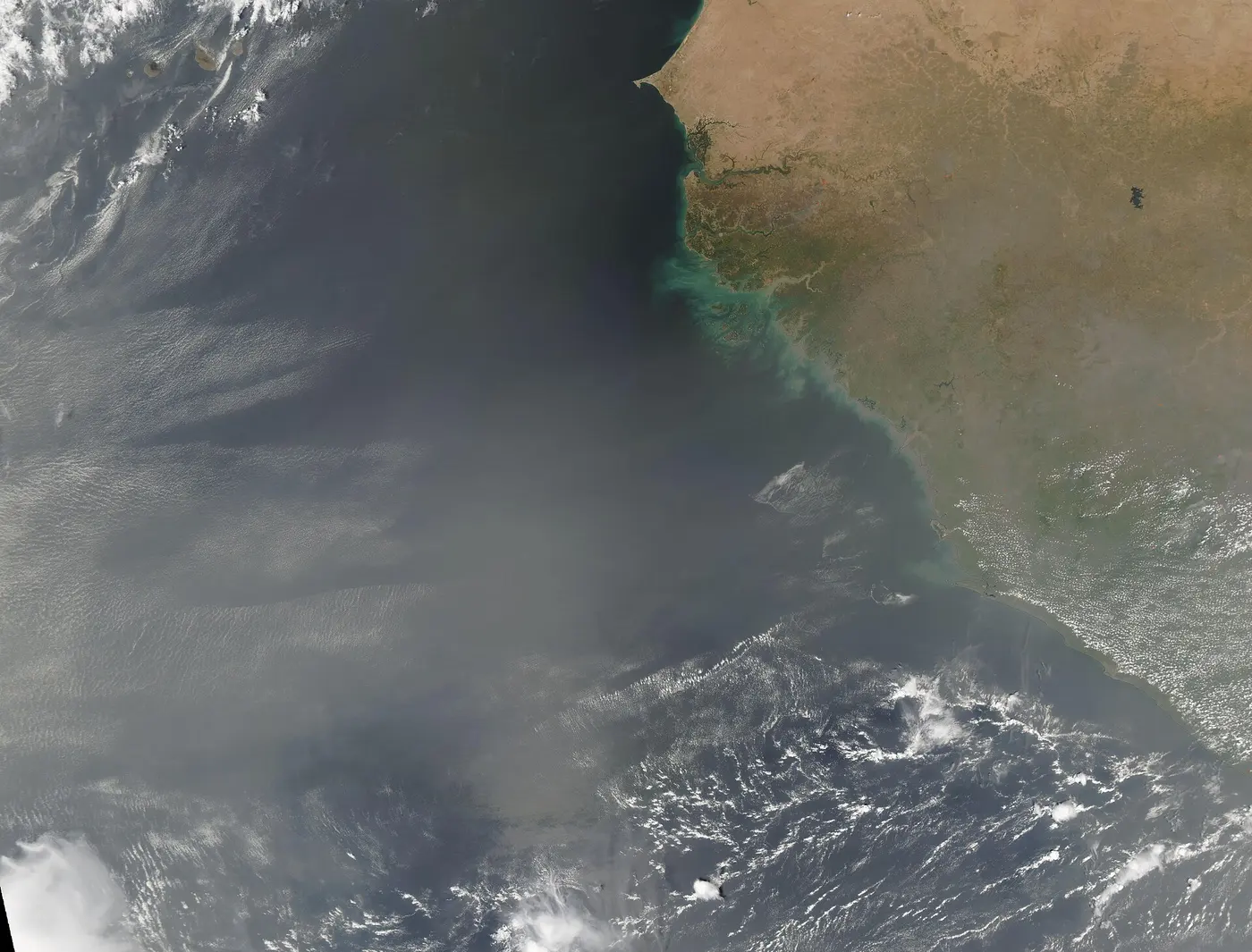

The amount swings widely from year to year. Between 2007, the dustiest year in the record, and 2011, the least dusty, it changed by 86 percent. The researchers also noticed that a wet year in the Sahel, the semi-arid belt along the Sahara’s southern edge, tended to be followed by a year with less dust.
A lush forest on poor soil
For all its greenery, the Amazon grows on poor soil. As NASA explains, the nutrients found in commercial fertilizers are in short supply in Amazonian soils; instead, they are locked up in the plants themselves. When leaves fall and decay, the nutrients they release are quickly taken up again by the trees. But some, phosphorus in particular, are washed by heavy rain into streams and rivers, draining out of the basin like water from a slowly leaking bathtub.
Phosphorus is essential for plant growth. Yu and his colleagues estimated that Saharan dust delivers about 22,000 tons of it to the Amazon each year, roughly the same amount the basin loses to rain and flooding. Phosphorus makes up only about 0.08 percent of the dust, but there is so much dust that it more or less plugs the leak.
The researchers suggest that African dust plays an important part in keeping the Amazon’s phosphorus from running out over decades to centuries. “This is a small world,” Yu said, “and we’re all connected together.”
Born in a dried-up lake
Much of the dust that reaches the Amazon comes from one particular spot: the Bodélé Depression in northern Chad.
According to a 2006 study, about half of the Amazon’s annual dust supply is blown out of this single source, even though it covers only about 0.2 percent of the Sahara. The depression lies in a corridor between two mountain ranges, the Tibesti and the Ennedi, which funnel and speed up the northeasterly winds. In winter it sends up dust on 40 percent of days, averaging more than 700,000 tons a day.
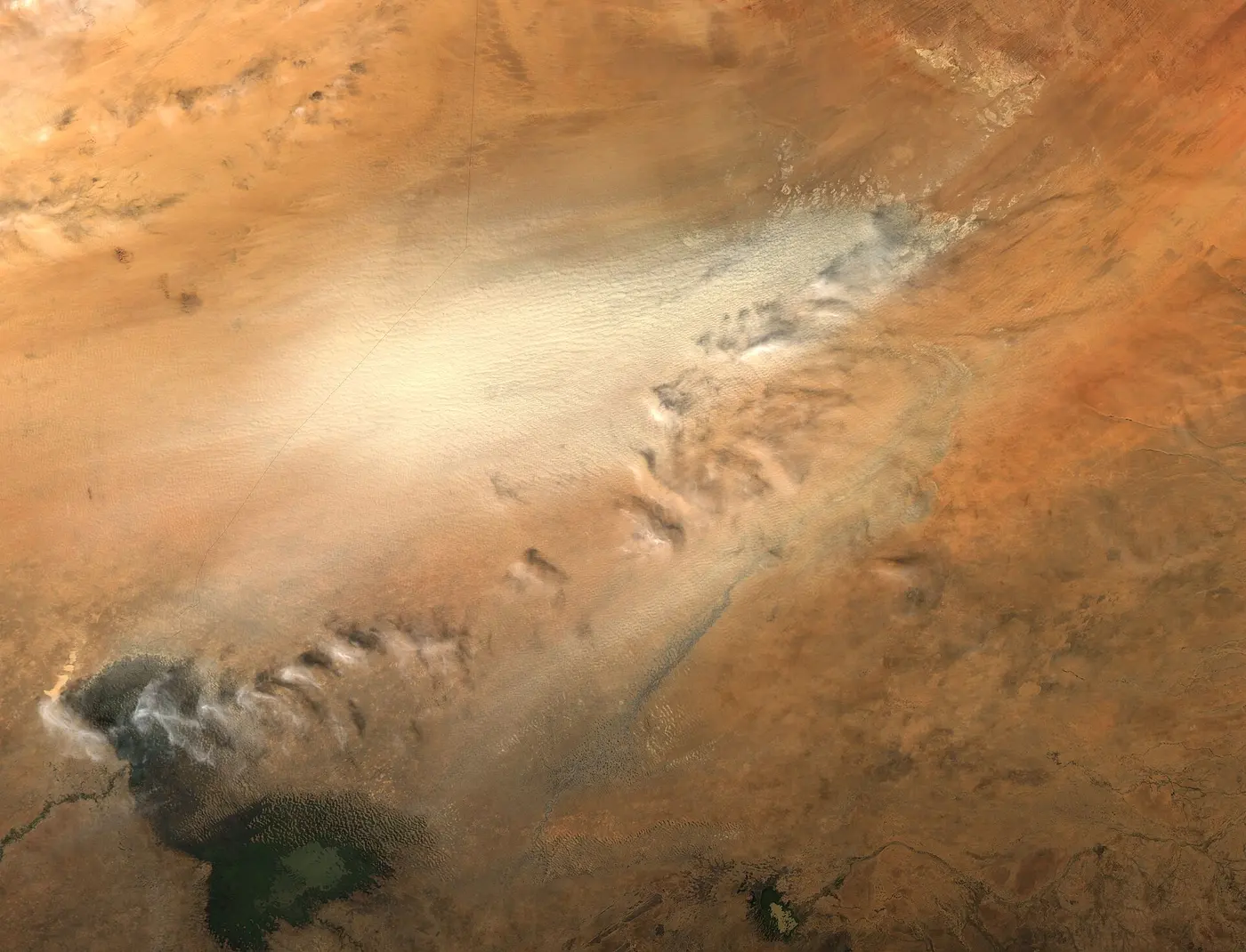

The Bodélé is the floor of a vanished lake. A few thousand years ago, when the Sahara was wetter, a vast body of water known as Lake Megachad covered the region. When it dried up, it left behind diatomite, a sediment built from the tiny shells of algae called diatoms, and fragments of that sediment make up much of the dust.
According to NASA, these lake-bed deposits, formed from the remains of dead microorganisms, are loaded with phosphorus. Microscopic life from an ancient lake is now riding the wind across an ocean to nourish a distant forest.