Why is a rugby ball oval?
Early balls, made from a pig’s bladder in a leather case, were nearly round. Rubber bladders later let makers shape them into an egg that is easier to carry.
1892
Once a rugby ball hits the ground, nobody can say whether it will bounce left or right. That oval shape is the game’s calling card. Soccer balls and basketballs are round, so why is rugby the odd one out?
The usual answer is that early balls were made from pigs’ bladders, and the shape of the bladder gave the ball its form. That is half right. The full story is a little more involved.
A pig’s bladder inside
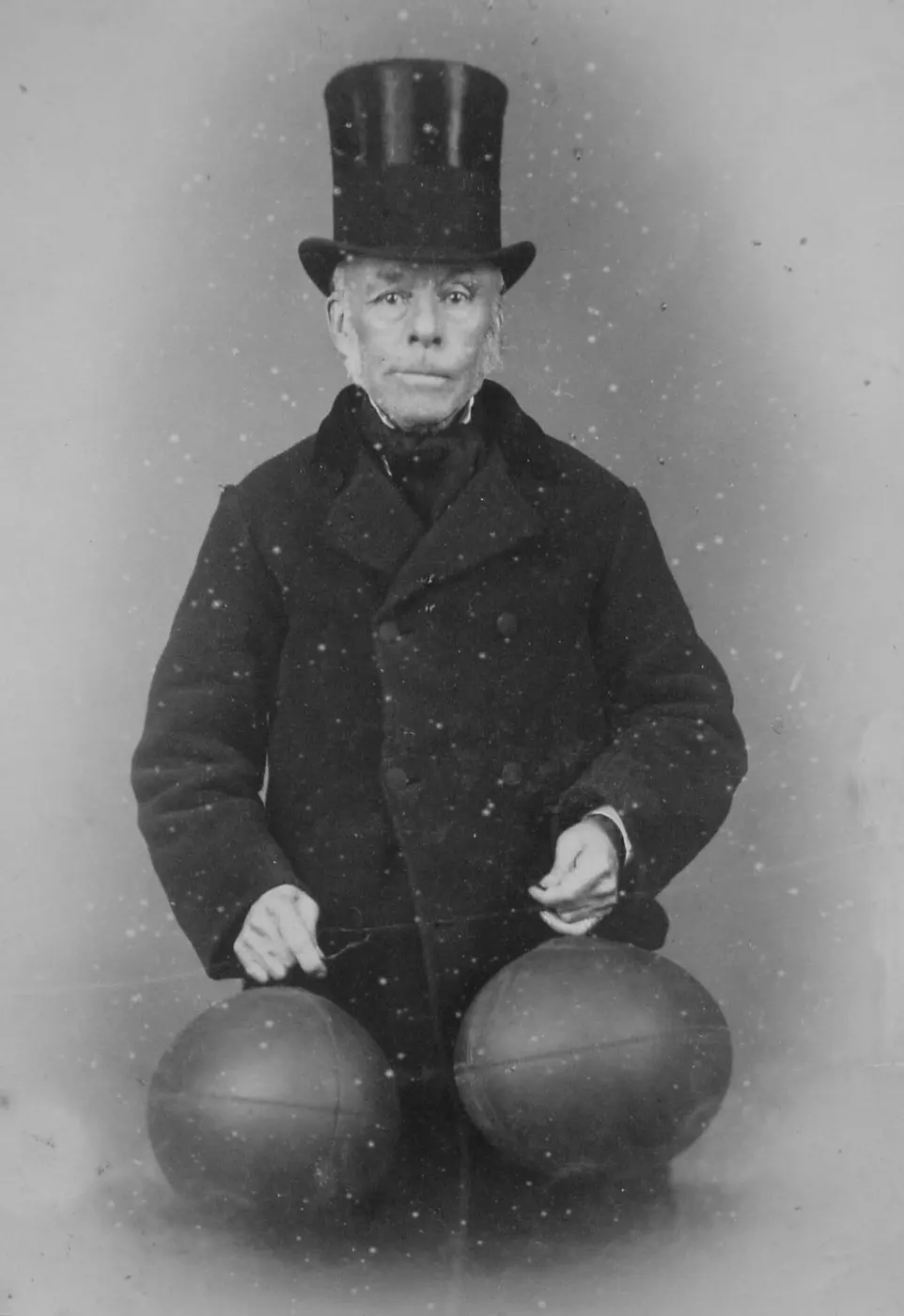
The story starts in Rugby, a market town in the English Midlands, where the boys of Rugby School played football by their own rules from the early 19th century. According to the World Rugby Museum at Twickenham, near London, William Gilbert (1799–1877), who ran a boot and shoe shop near the school, was making footballs for the pupils by the 1820s. Each one was a hand-stitched leather case holding an inflated pig’s bladder.
The bladders were blown up by mouth while still fresh, through the stem of a clay pipe. It was not a pleasant job, and a bladder from a diseased pig carried a risk of infection. There were no rules on size, either. A ball was as big as its bladder, so younger boys played with smaller balls and senior matches used larger ones.
The museum notes that while the bladder is said to have given the ball its shape, the early balls were “plum-shaped” rather than oval. A big, roundish ball suited the game of the time, in which kicking the ball a long way mattered more than carrying it.

Lindon and the rubber bladder
Rugby had a second bootmaker in the ball business, Richard Lindon (1816–1887). His wife, Rebecca, died of a lung disease in 1843. The World Rugby Museum suggests that years of inflating bladders in the workshop may have been to blame, and her death set Lindon looking for a safer material.
Inspired by exhibits at the Great Exhibition in London in 1851, Lindon pioneered a bladder made of India rubber. Rubber was too tough to blow up by mouth, so he also invented a brass hand pump.
With rubber bladders, makers could control a ball’s size and shape for the first time. This came just as the game was shifting from kicking toward carrying and passing, and the ball gradually became more egg-shaped and easier to handle. Lindon claimed to have invented the oval ball, but he never patented the ball, the bladder or the pump, and other manufacturers soon copied his methods.
Oval by law
Nobody recorded exactly when the ball became oval. But Thomas Hughes’s novel Tom Brown’s School Days (1857), set at Rugby School in the 1830s, describes the new ball lying alone in the middle of the field before kickoff, “pointing towards the School or island goal.” A perfectly round ball cannot point anywhere, and some historians read the line as a sign that the ball was no longer round even then.
The rulebook caught up much later. The Rugby Football Union, England’s governing body, was formed in 1871, but it was not until 1892 that its laws called for an “oval ball” and set its dimensions: 11 to 11¼ inches (about 28 cm) long, 30 to 31 inches (76 to 79 cm) around the ends, 25½ to 26 inches (65 to 66 cm) around the middle, and 12 to 13 ounces (340 to 370 g) in weight. It even had to be hand-sewn, with at least eight stitches to the inch.
In 1931–32 the width was reduced to 24 to 25½ inches (61 to 65 cm) around, making the ball slimmer still. Today’s regulations call for a ball 28 to 30 cm (11 to 12 inches) long, 58 to 62 cm (23 to 24 inches) around at its widest point, and 410 to 460 g (14½ to 16 ounces) in weight. It is noticeably sleeker than its Victorian ancestor.

The name that stuck
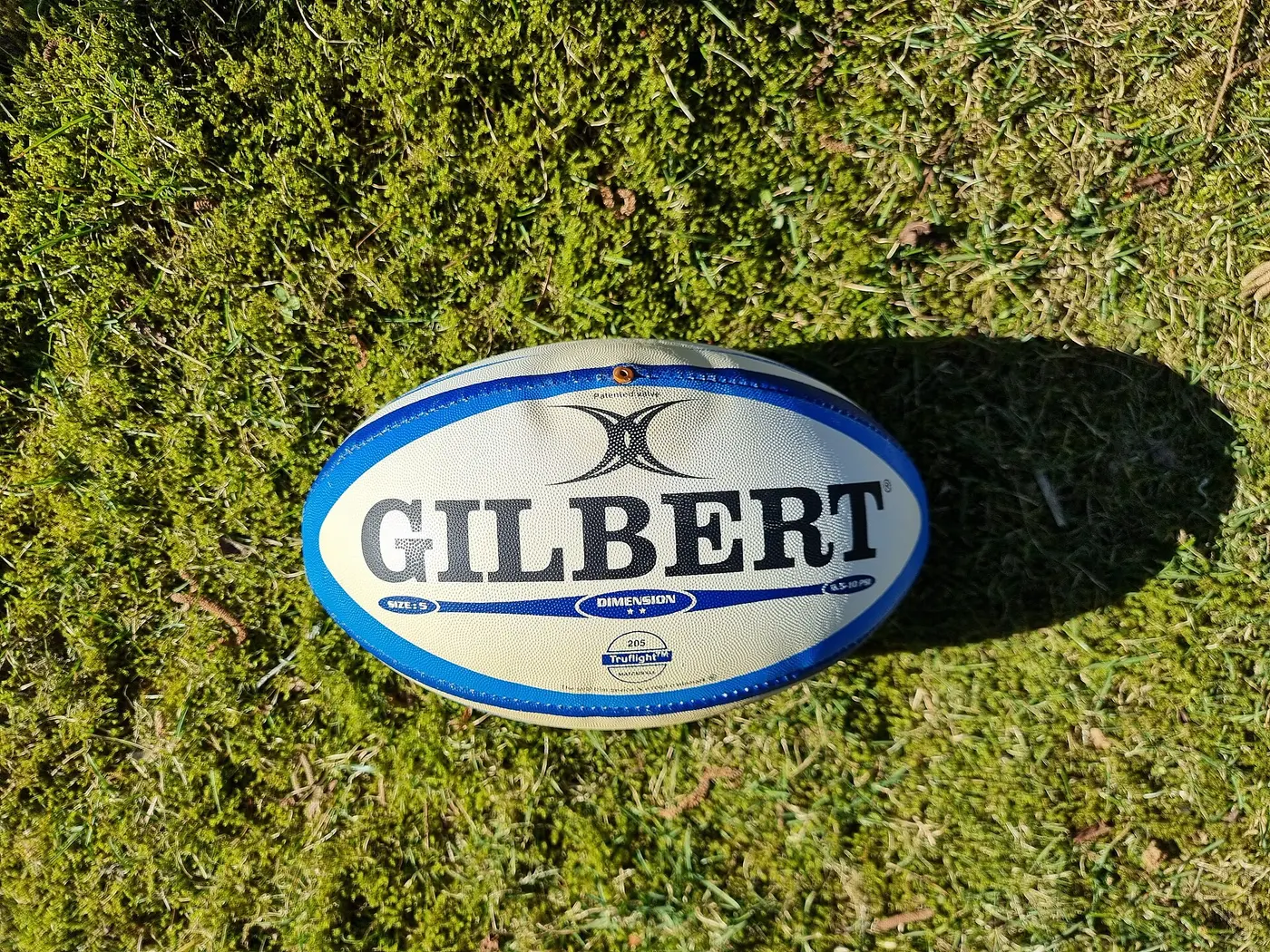
When Gilbert died in 1877, his workshop was turning out 2,800 balls a year. His obituary in the local Rugby Advertiser noted that his footballs were “to be found all over the world.” His nephew James took over the business, and the Gilbert name lives on as a brand; the company has supplied the Rugby World Cup since 1995. Lindon, who came up with the rubber bladder and the pump, is far less remembered.
Leather soaked up rain and grew heavy, so from the 1970s synthetic balls began to take over. A leather Gilbert ball was used in an international match for the last time in 1986.