Are green peppers and bell peppers the same plant?
Yes. Green peppers, colorful bell peppers and even fiery chilies all belong to the same species. A green pepper is simply an unripe fruit, and if left on the plant it turns red.
In Japanese supermarkets, peppers come in two kinds. There is the piman, a thin-walled green pepper with a slightly bitter bite, and there is the “paprika,” a big, fleshy, sweet pepper in red, yellow or orange. They are used so differently in cooking that many people assume they are different vegetables.
Botanically, though, they are the same species. In fact, they are the same species as the hot little red chilies called takanotsume, or “hawk’s claws,” that Japanese cooks use for heat.
All of them are chili peppers
Both peppers belong to Capsicum annuum, a member of the nightshade family. According to the Japanese encyclopedia Nihon Daihyakka Zensho, the species is broadly divided into hot and sweet types. Hawk’s claw chilies and jalapeños are hot; Japan’s green piman and the slender shishito pepper are sweet.
Japan’s Agriculture and Livestock Industries Corporation (ALIC), a government agency, explains that among the sweet types, the small ones are called shishito, the medium bell-shaped ones piman, and the large, thick-walled ones “paprika.” The names, in other words, describe varieties sorted by size, shape and thickness, not different plants.
So why aren’t these peppers hot? The heat in chili peppers comes from a compound called capsaicin. In 2005, a team led by researchers at Cornell University identified a gene that is essential for making it. In every non-pungent pepper they tested, part of that gene was missing. Sweet peppers are, in effect, chili peppers that have lost their tools for making heat.
Green means young
According to the same encyclopedia, the fruits of Capsicum annuum are green when young, whatever the variety, and turn yellow and then red or another color as they ripen. The green peppers we usually eat are picked before they are ripe. Japan’s Ministry of Agriculture, Forestry and Fisheries also says that green peppers turn red when fully ripe. The “red piman” sometimes seen in Japanese stores is the same pepper, simply left to ripen.
Ripening changes what is inside, too. According to ALIC, a ripe red pepper is less bitter and sweeter than a green one, with about 2.6 times as much carotene and 2.2 times as much vitamin C. The red color comes from a pigment called capsanthin.
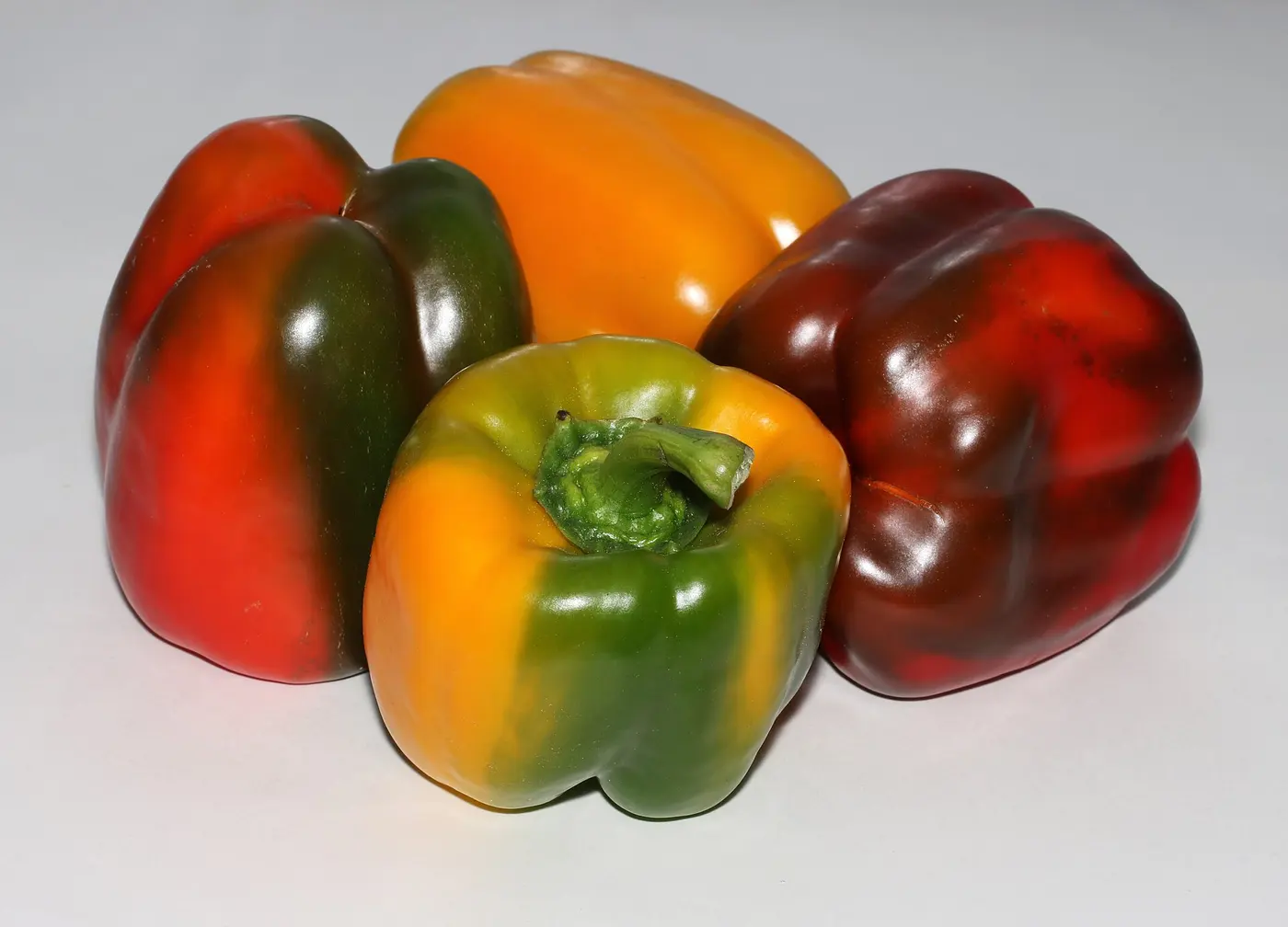

Bell peppers are green before they ripen as well. According to the agriculture ministry, they then turn red, yellow or orange. ALIC notes that because they are harvested only after they color up, they take at least three weeks longer than green peppers, and the plants can grow taller than 4 meters (13 feet).
Yellow peppers stay yellow because of their genes, too. According to studies by teams in France and South Korea, the gene for the enzyme that makes the red pigment capsanthin is either missing or broken, so no red pigment is produced and the fruit ripens yellow.
A French name and a Hungarian one
The Japanese word piman comes from piment, the French word for chili pepper. Chili peppers are native to the Americas. According to Nihon Daihyakka Zensho, Columbus brought them to Spain in 1493, and by the mid-16th century they had spread across Europe. They reached Japan in the 16th century too.
Large, mild bell peppers arrived from Europe and the United States in the Meiji era (1868–1912). But according to ALIC, they did not really catch on until after the mid-1950s. The early peppers were bigger and thicker-walled than today’s and had a strong grassy smell, which put many people off. Only when breeders crossed them with small Japanese chili varieties to produce thinner-walled, milder peppers did they become a staple of Japanese cooking.
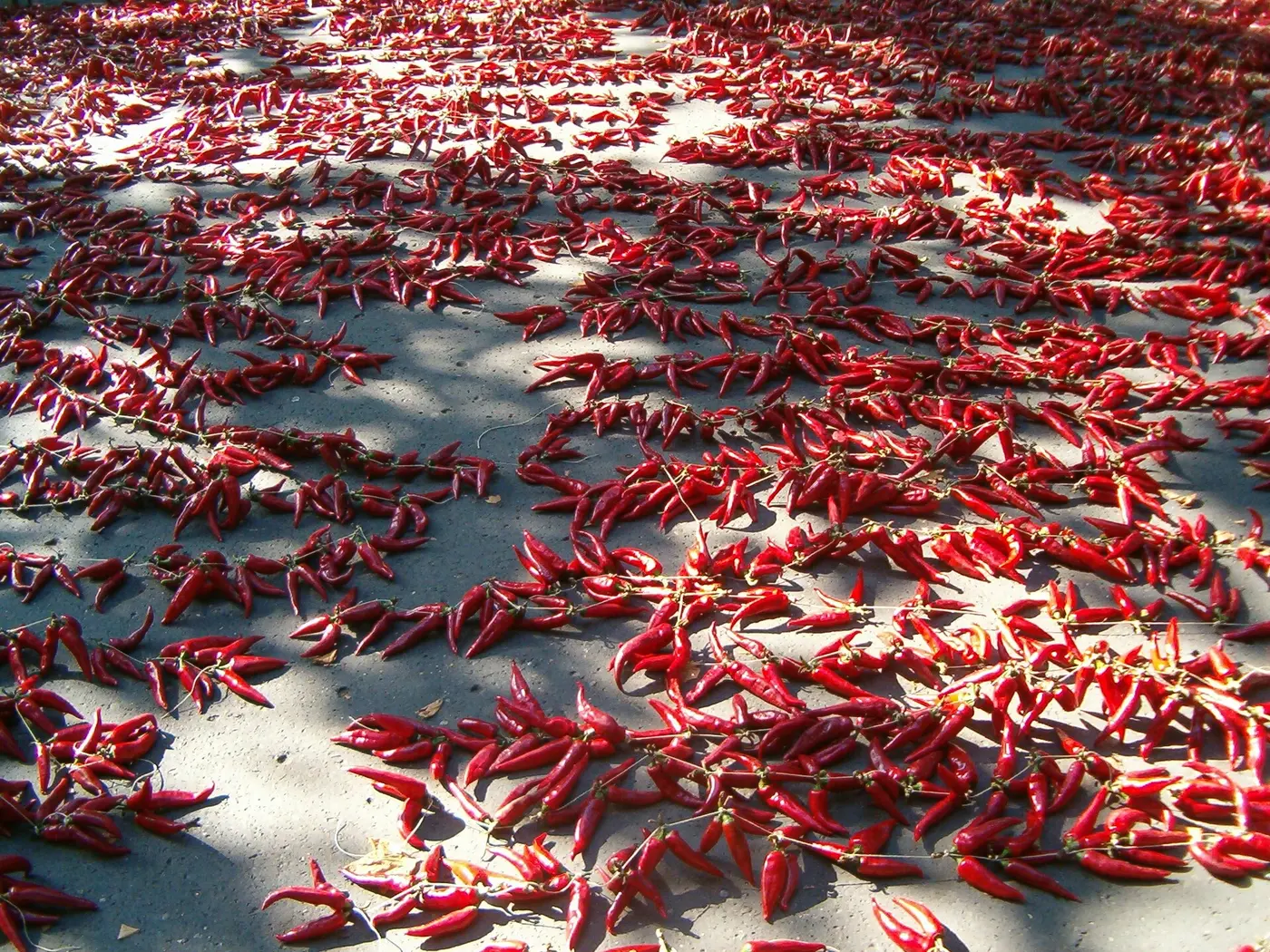

The word “paprika,” meanwhile, comes from Hungarian, where it is the word for capsicum peppers. According to the Online Etymology Dictionary, it goes back further still, to a Serbo-Croatian word for pepper. The spice made from dried, ground sweet peppers grown in places such as Hungary and Spain is called paprika, too. The large, colorful peppers known in Japan as paprika began appearing in stores after imports of fresh peppers from the Netherlands were allowed in 1993. At first nearly all of them were imported, but more and more are now grown in Japan.