Does “posh” stand for “port out, starboard home”?
There is no evidence that it does. No ticket stamped “P.O.S.H.” has ever turned up, and dictionaries reject the story. The real origin of posh is unknown.
Posh means elegant or fashionable, and in British English it can also mean typical of the upper classes, as in “posh accents.” It is a short, snappy word, and it comes with a famous origin story: it supposedly stands for “Port Out, Starboard Home.”
It is a good story. Dictionary editors, however, have been shaking their heads at it for decades.
The cool side of the ship
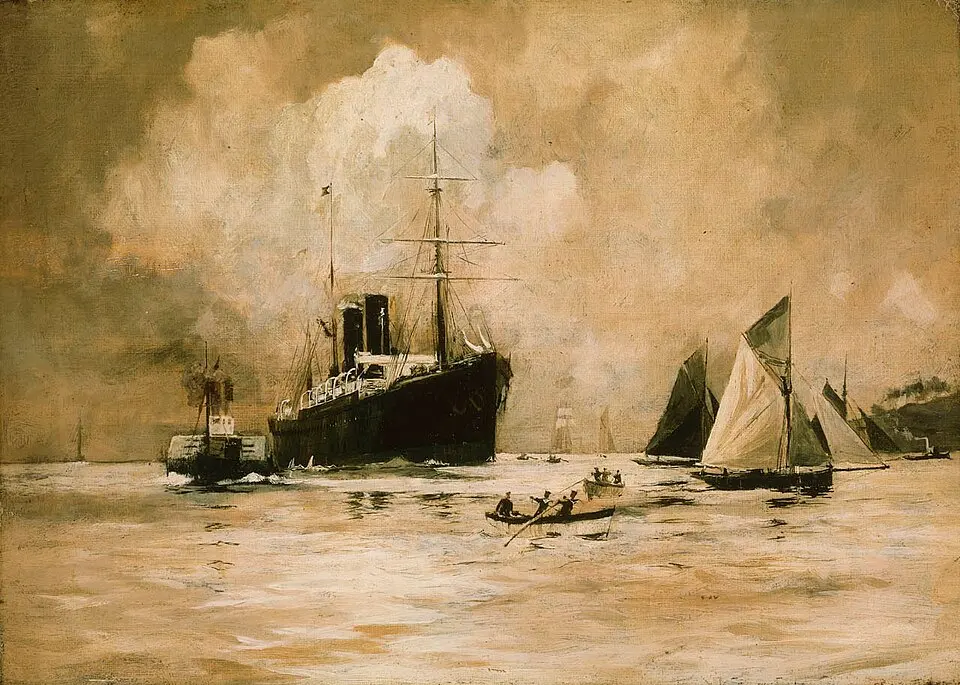
Merriam-Webster, which says it receives dozens of letters about the story every year, has laid out its most elaborate version. The setting is the Peninsular and Oriental Steam Navigation Company, better known as P&O, which from 1842 to 1970 was the main carrier of passengers and mail between England and India. Its ships passed through the Suez Canal and the Red Sea. On the way out to India, cabins on the port side, the left as you face the bow, caught the morning sun and had the rest of the day to cool off, while starboard cabins got the afternoon sun and were still hot at bedtime. On the voyage home, the reverse was true.
The cooler cabins, the story goes, were reserved for the most important and wealthiest passengers, and their tickets were stamped P.O.S.H. In one recollection, the letters were large and violet.

No tickets, no proof
“But the story won’t float,” Merriam-Webster writes. The acronym explanation does not appear in print until the 1930s. The earliest example the company knows of is a letter to the Times Literary Supplement of October 17, 1935, which described “port out, starboard home” as “an American shipping term describing the best cabins.” The earliest link to P&O seems to come from Boyd Cable’s A Hundred Year History of the P. & O., published in 1937, and Cable himself calls it a “tale.” As late as 1962, P&O’s own librarian could find no evidence that P.O.S.H. had ever been stamped on anything. Ironically, the company used the story in its advertising in the 1960s.
Merriam-Webster raises a practical objection too: why would booking clerks need to stamp anything? They would surely have known the location of every cabin from its number. According to the Online Etymology Dictionary, the Oxford English Dictionary also rejects the acronym, citing objections set out by the researcher G. Chowdharay-Best in the maritime history journal The Mariner’s Mirror in 1971. The British word historian Michael Quinion puts it bluntly: “there’s absolutely no evidence for it and P&O flatly denies any such term existed.” People occasionally claim to have seen one of the tickets, he adds, but no dictionary editor will be swayed by such memories “unless and until an actual ticket turns up.”
So where did posh come from?
The word itself is older than the story. Merriam-Webster dates its first known use to 1914 and lists its origin as unknown. The Online Etymology Dictionary quotes a 1914 book, The British Army From Within, which notes that “the cavalryman, far more than the infantryman, makes a point of wearing ‘posh’ clothing on every possible occasion,” posh meaning smarter clothes than the regulation issue. In September 1918, a cartoon in the humor magazine Punch showed an air force officer telling his mother, “Oh, yes, Mater, we had a posh time of it down there.” When she asks what he means, he explains that it is slang for “swish.”
There is a tantalizing earlier clue. In a 1903 story, P. G. Wodehouse described a bright yellow waistcoat as “quite the most push thing of the sort at Cambridge.” Push, not posh, and nobody knows whether it was a misprint.
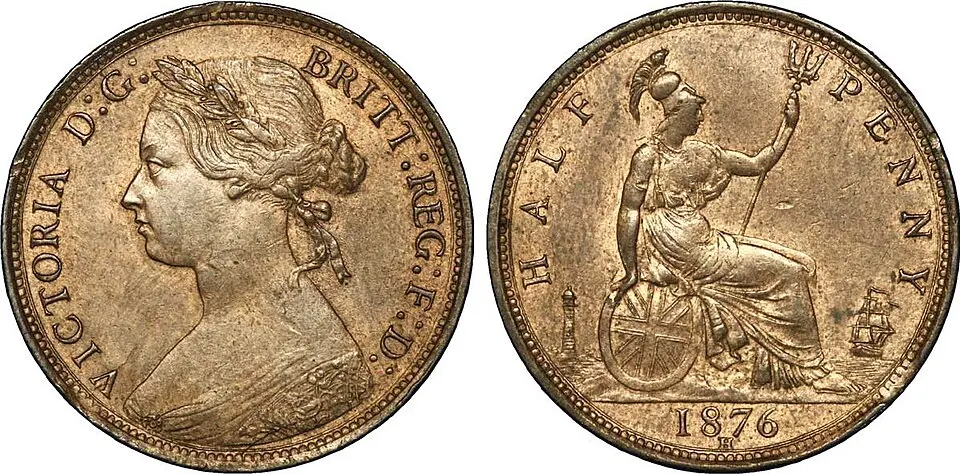

One leading candidate is slang for money. According to the Online Etymology Dictionary and Quinion, posh was thieves’ slang by 1830, originally for a coin of small value such as a halfpenny, and may come from the Romani word posh, “half.” A shift from “money” to “well off” and then to “upper-class,” Quinion writes, “is not too hard to imagine.” There was also a London slang posh meaning “a dandy” in the 1890s. In the 1892 comic novel The Diary of a Nobody, a character named Murray Posh is described as “quite a swell.” The Oxford Advanced Learner’s Dictionary suggests posh may come from this “dandy” sense. None of these theories has been proved, and the origin of posh remains, officially, unknown.