Why does Japan have so many hot springs?
Japan has plenty of volcanic heat, and even where there are no volcanoes, drilling deep enough reaches water warmed by the heat of the earth.
27,899sources
According to Japan’s Ministry of the Environment, the country had 27,899 hot spring sources as of the end of March 2025. There were 2,839 onsen areas, places with hot springs and somewhere to stay, and together the sources produced about 2.48 million liters (650,000 gallons) of water a minute.
The obvious explanation is volcanoes, and they are indeed a big part of it. But they are not the whole answer. Japan’s huge number of hot springs also owes a lot to the heat of the earth, to human effort and to the surprisingly broad legal definition of an onsen.
Oita leads the country
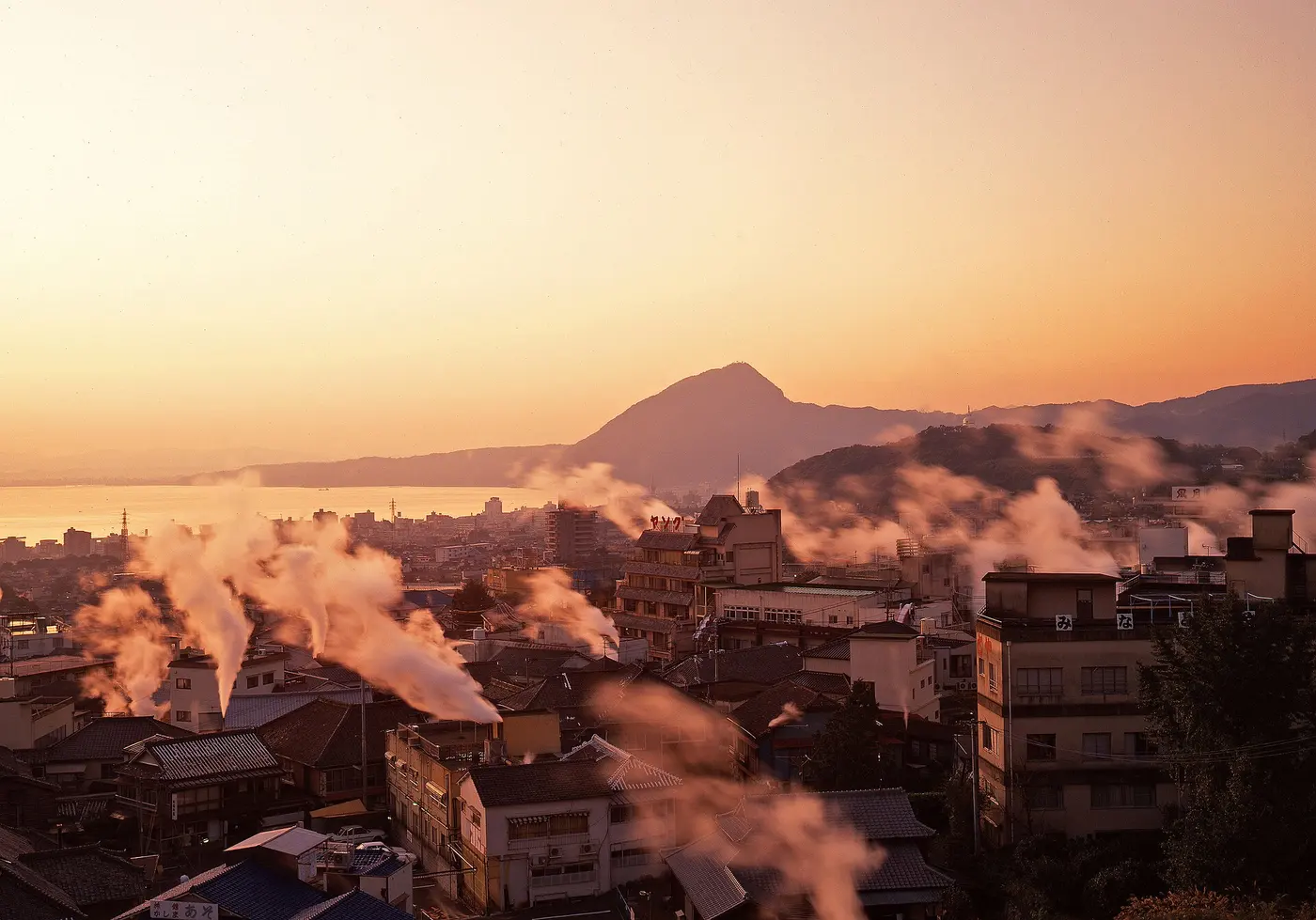
By prefecture, Oita on the island of Kyushu ranks first in both the number of sources and the volume of water. Its 5,094 sources make up about 18 percent of Japan’s total. Kagoshima comes second with 2,735, followed by Hokkaido with 2,249 and Shizuoka with 2,185.
More surprising are the big cities. Tokyo has 168 sources and Osaka 173. Even Okinawa, which has the fewest, has 22. Hot springs are not just for mountain spa towns.

A surprisingly broad definition
What makes something an onsen in the first place? Japan’s Hot Springs Act of 1948 defines a hot spring as warm water, mineral water, steam or other gas coming out of the ground that meets either of two conditions. One is a temperature of at least 25°C (77°F) where it emerges. The other is containing at least a set amount of any one of 19 specified substances.
For example, water qualifies if one kilogram of it contains at least 1,000 milligrams of dissolved substances in total. It also qualifies with at least 1 milligram of lithium ions, or 50 milligrams of metasilicic acid. So water can be an onsen even if it is cool, as long as it meets a mineral test, and it can be an onsen with very few minerals, as long as it is warm enough.
In fact, the ministry counts 4,074 sources below 25°C. At the other end, 12,695 sources, about 45 percent of the total, are 42°C (108°F) or hotter.
Springs heated by volcanoes
Hot springs fall into two broad types: volcanic and non-volcanic.
Volcanic hot springs form when rainwater seeps underground and is heated by magma chambers before rising back up. According to the Ministry of the Environment, almost all of Japan’s large onsen areas lie in volcanic regions from relatively recent geological times. Japan has 111 active volcanoes, which a data book from Japan’s Ministry of Land, Infrastructure, Transport and Tourism puts at about 10 percent of the world’s total. There is no doubt that all those volcanoes help.

No volcano? Just dig deeper
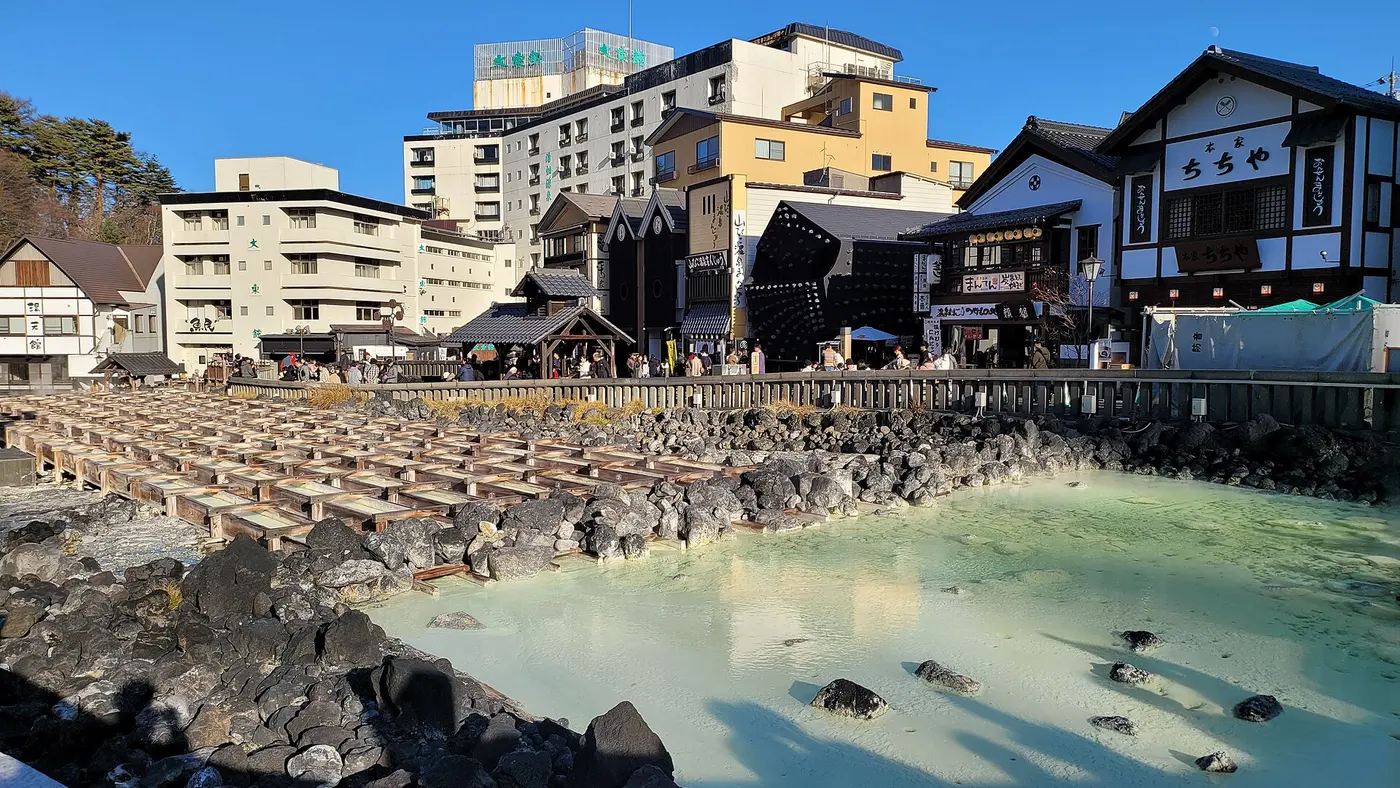
Some hot springs have nothing to do with volcanoes. The deeper you go underground, the hotter it gets. According to the Ministry of the Environment, in non-volcanic areas of Japan the temperature typically rises by about 2.5 to 3°C for every 100 meters (330 feet). Drill down 1,000 meters and the water should be roughly 25 to 30°C warmer than at the surface. Pumping up groundwater warmed this way gives what is called a deep groundwater hot spring. There are also “fossil water” hot springs, where ancient seawater was trapped in rock layers by movements of the earth’s crust and then warmed by the heat below.
Many of these non-volcanic hot springs are pumped up from deep underground. Across the country, only about 7,800 sources flow naturally to the surface. The other 20,000 or so, around 70 percent, rely on pumps, and pumped sources also account for about 70 percent of the total flow.
There is a catch. Deep hot spring water takes a long time to be replenished by rain seeping down, and fossil water is barely replenished at all. The ministry warns that pumping too much can make hot springs run dry.