Where does the “nick” in “nickname” come from?
From eke, an old English word for “addition.” “An ekename” was misheard as “a nekename,” and the word gained an n.
Most of us have been called something other than our real name at some point, at school, at work or among friends. In English it is a nickname, and Japanese has borrowed the word as nikkunēmu, alongside its native adana.
But what is the nick in nickname? English has Nick as a short form of Nicholas, and nick as a word for a small notch or cut. The nick in nickname, however, has nothing to do with either of them.
Originally an “extra name”
According to the American Heritage Dictionary of the English Language, nickname comes from the Middle English neke name, which in turn arose from an eke name, the word eke name with the article an in front.
Eke was an old English word meaning “addition.” An eke name was simply an “additional name,” a name added on top of the one you were born with. That is exactly what a nickname is.
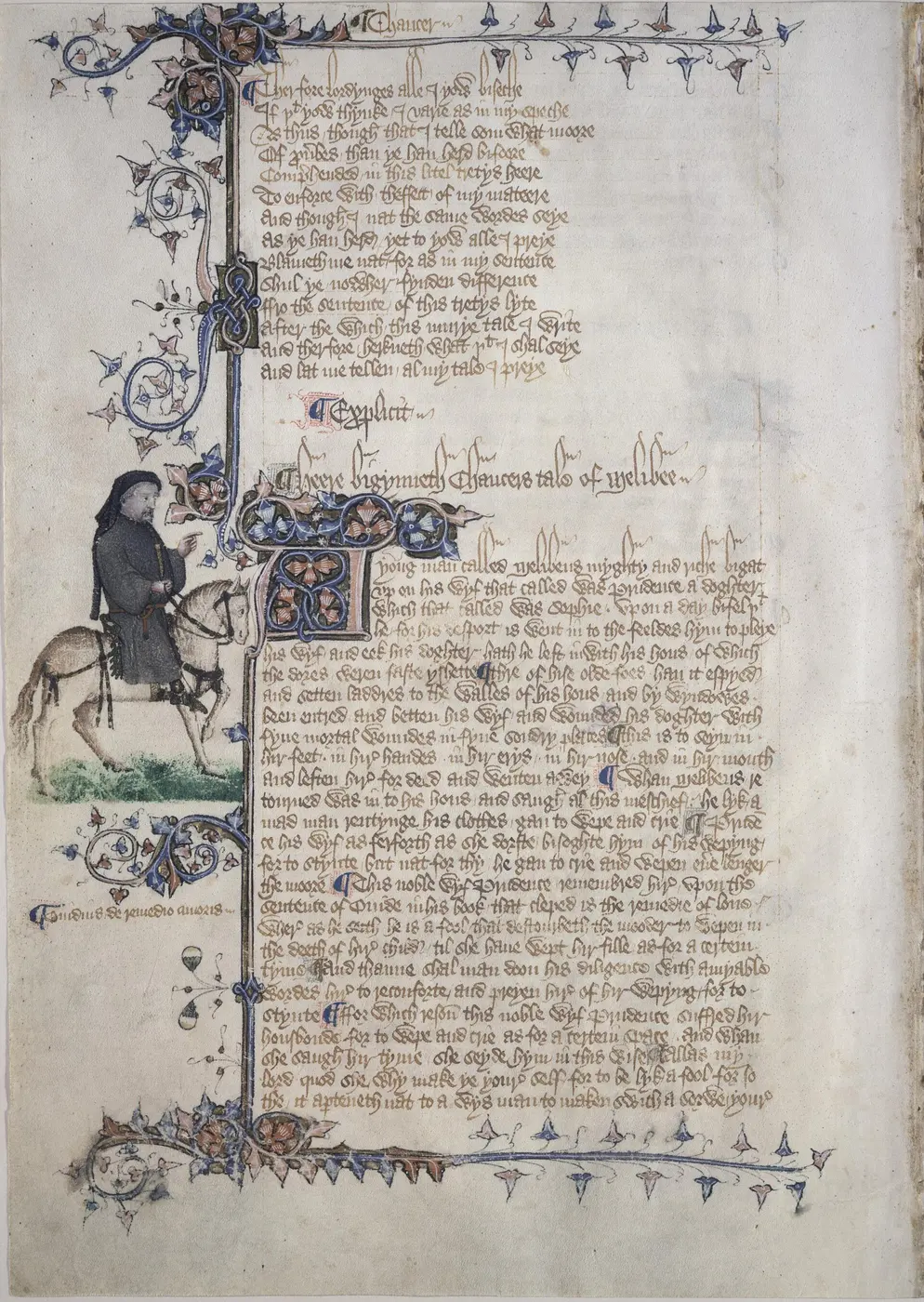
Eke still lingers in modern English. To eke out means to supplement something that is in short supply, often with great effort, as in eking out an income by working two jobs. This eke also goes back to an Old English word meaning “to increase.” And in older English, eke could simply mean “also.” Chaucer uses it again and again in The Canterbury Tales, as when he promises to describe his fellow pilgrims, “And eek in what array that they were inne,” that is, “and also what clothes they were wearing.”

The n that moved
So how did an eke name turn into a neke name?
In English, an goes before words that begin with a vowel sound and a before words that begin with a consonant. Said aloud and run together, “an eke name” sounds just the same as “a neke name.” Listeners took the n of an to be the start of the next word, and the result was a new word, neke name. Over the following centuries the spelling and pronunciation shifted, giving us nickname.
Linguists call this kind of shift in a word boundary rebracketing, or metanalysis. In speech, words run together without clear gaps, so mishearings like this are easy to make, and occasionally they stick.
Swedish, as it happens, has a cousin of the same “additional name”: öknamn. It never picked up an n.
Words that lost their n
Curiously, English has several examples of the opposite: words that originally began with n but lost it, because people heard the n after a as belonging to an.
Apron used to be napron. It comes from an Old French word for a little tablecloth and is related to napkin. “A napron” was heard as “an apron,” and the n fell away.
The adder, the venomous snake found across much of Europe, was nǣdre in Old English. “A naddre” became “an addre.” Umpire, the official who rules on a game, comes from noumpere, from an Old French word meaning “not equal,” in the sense of an odd third person who belongs to neither side. “A noumpere” became “an oumpere.” The auger, a tool for boring holes, was once a nauger, from an Old English word meaning roughly “hub spear.”
Even the orange may belong on this list. The word traces back through Arabic nāranj and Persian nārang to Sanskrit, and Spanish still calls the fruit naranja. Yet by the time it reached Old Italian as arancio, and then French and English, the n was gone. A slip with the article is a common explanation, though the details of exactly where it happened are less certain.


Other words, like nickname, gained an n. Newt was once eute, and “an eute” was rebracketed as “a neute.” Over the centuries, that little n has wandered back and forth between a and an and the words that follow them.