Did Marco Polo really go to China?
Most historians think he did. Skeptics point to what his book leaves out, but Chinese records and his remarkably accurate details on paper money and salt suggest he really lived in Mongol-ruled China.
17years
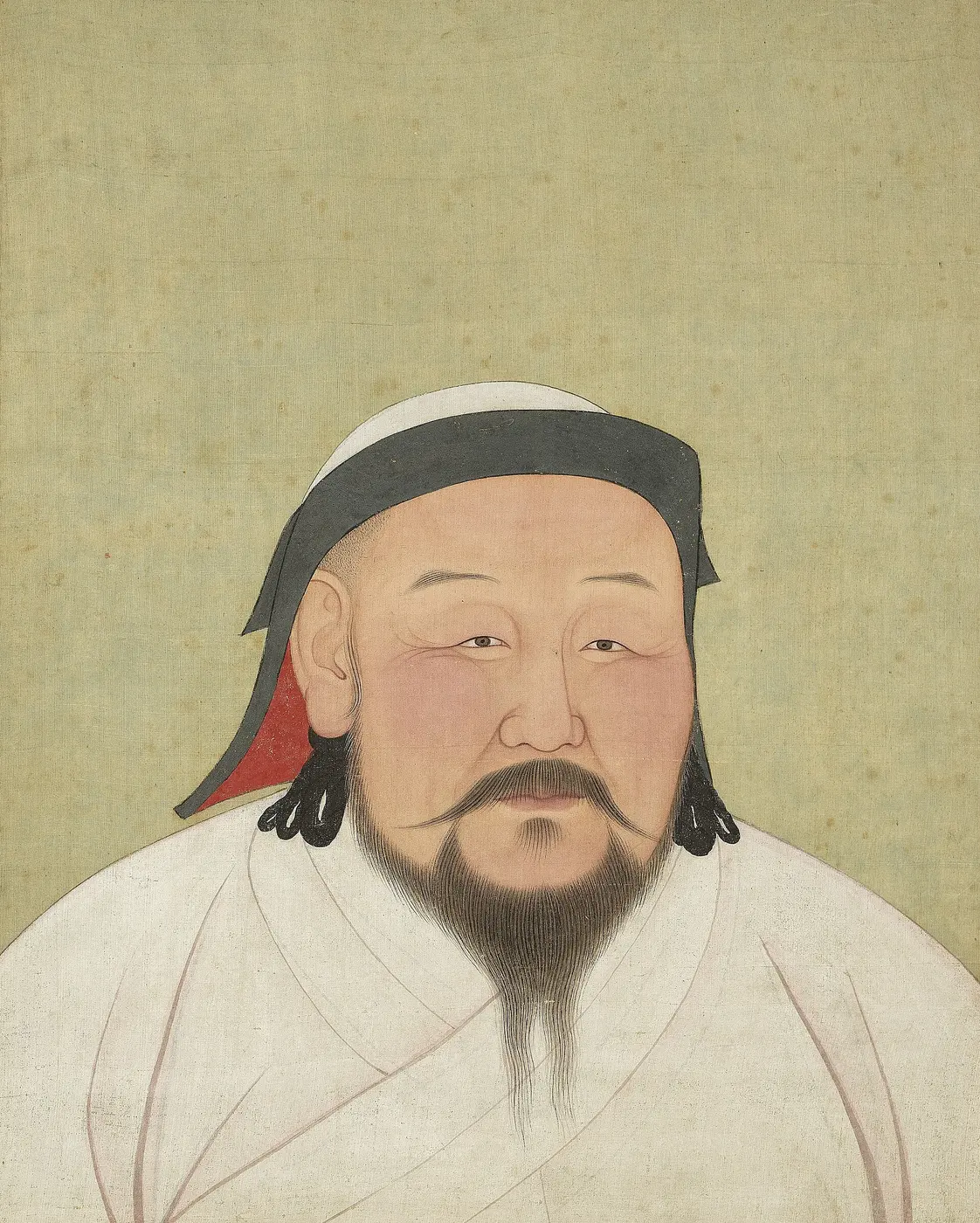
At the end of the 13th century, the Venetian merchant Marco Polo told the story of a journey to the East that had lasted more than 20 years. The book that came of it was the first to tell Europeans about the court of the Mongol emperor Kublai Khan, and about a distant island rich in gold, “Chipangu,” or Japan.
In 1995, however, Frances Wood, head of the Chinese department at the British Library, published a book with a pointed title: Did Marco Polo Go to China? It caused a stir, and a Japanese translation followed two years later. So did he?
A story told in prison
According to standard reference works such as the Japanese encyclopedia Nipponica, Marco set out in 1271 with his father, Niccolò, and his uncle Maffeo, both jewel merchants. They crossed Central Asia and probably reached Kublai around 1274. Marco then served the Yuan dynasty for some 17 years and traveled widely. He finally left China as part of the escort for a Mongol princess, Kököchin, who was to marry the ruler of the Ilkhanate, the Mongol state centered on Iran, and he was back in Venice in 1295.
Soon afterward he was captured in a war between Venice and Genoa. In a Genoese prison he told his story to a fellow prisoner, Rustichello of Pisa, a writer of romances, and the result was the book known in English as The Travels of Marco Polo. Its original title was The Description of the World. Rustichello’s manuscript is lost; what survives is some 140 manuscripts and early editions, each a little different from the others.

No Great Wall, no tea
Doubts about the journey go back to the mid-18th century, according to the University of Tübingen. Wood’s case rested largely on what the book leaves out: the Great Wall, tea, foot-binding, chopsticks, Chinese characters and calligraphy. Someone who had lived in China for years, she argued, would surely have mentioned them. Nor does Polo’s name turn up in any Chinese record.
Wood suggested that Polo never went much farther than the Black Sea and Persia, and that he pieced his account together from merchants’ tales and Persian books. It is certainly odd that a man who claimed to serve the Great Khan never mentions tea. Polo also said he governed the great city of Yangzhou, on the lower Yangtze, for three years, yet no Chinese record backs this up.
Chinese records, paper money and salt
Rong Xinjiang, a historian at Peking University, said in a 2024 interview that the mainstream view in academia is that Polo did go to China. As early as 1941, the Chinese historian Yang Zhijiu found a memorial preserved in the Yongle Dadian, a vast Ming-dynasty encyclopedia, listing three envoys sent to the Ilkhanate. Their names matched the three envoys who, in Polo’s account, came to fetch the princess.
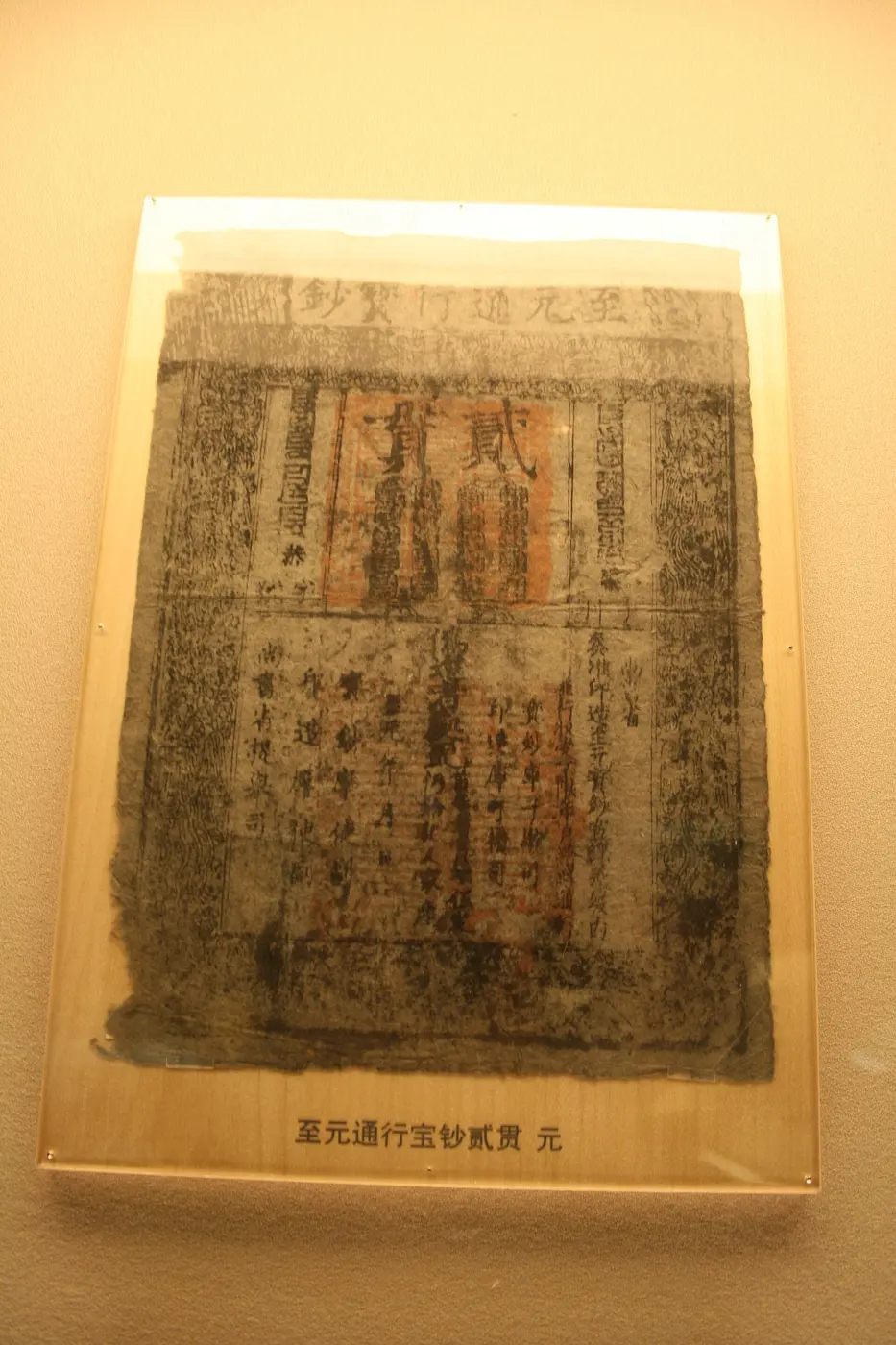
In 2012, the Tübingen sinologist Hans Ulrich Vogel published a detailed study of Polo’s descriptions of money and salt. Polo explains how paper money was made from the bark of the mulberry tree, how it was stamped with seals, and even that worn-out notes could be exchanged for a 3 percent fee. He also says paper money circulated in the north and along the Yangtze but not in Fujian or Yunnan, where cowrie shells and salt served as currency. Chinese texts and archaeological finds bear this out. Most of those Chinese sources were compiled long after Polo’s time, and in any case he could not read Chinese. Vogel concluded that Polo really did serve the Great Khan.

As for the Great Wall, the university pointed out that the wall we know today was built under the Ming dynasty, after Polo’s time; the older earthen walls had long since crumbled and had no military role in the Mongol empire. Rong suggests that Polo was not a court official at all but an ortoq, a merchant who did business with capital from Mongol royalty, which would explain his absence from official records. Polo’s place names follow Persian rather than Chinese forms, Rong adds, which suggests he got by in Mongolian and Persian rather than Chinese.
Japan, by hearsay
Not everything Polo said was true. Even Rong notes that the book contains plenty of exaggeration and fantasy, and Japan is a prime example.
Polo never went to Japan. Even so, he described “Chipangu” as a very large island in the high seas, 1,500 miles east of the mainland, where “the quantity of gold they have is endless.” Its ruler’s palace, he said, was “entirely roofed with fine gold, just as our churches are roofed with lead,” and its floors were paved with plates of gold “a good two fingers thick.” He added an account of Kublai’s invasion fleet, wrecked by a storm. Whatever stories reached him in China clearly grew in the telling.