Were French fries really born in France?
Most likely. Potato sticks fried in deep fat seem to have caught on at Paris street stalls in the early 19th century, and the evidence for a Belgian origin is weak.
Next to a burger, beside a steak, in a paper cone: fried potato sticks are eaten all over the world. Americans call them French fries, or just fries, and the British call them chips. Take the American name at face value, and they come from France.
Belgium begs to differ. There, the fry stand on the street corner is a national institution, and moules-frites, mussels with fries, is often called the national dish. Many Belgians insist that fries were invented in their country, not in France. Which side is right?
A frozen river and potato “fish”
The Belgian claim rests largely on one passage. People along the Meuse River, in towns such as Namur and Dinant, it says, used to fry small fish caught in the river. When the river froze in winter and fishing became impossible, they cut potatoes into the shape of little fish and fried those instead, a practice already more than a hundred years old. The passage is said to come from a manuscript written in 1781, which would put fried potatoes in Belgium around 1680.
It was brought to light by the Belgian historian and journalist Jo Gérard. Once it appeared in a magazine at the end of 1984, the story spread fast.
Pierre Leclercq, a food historian affiliated with the University of Liège in Belgium, has taken it apart. The passage, he says, describes thin slices of potato browned in a little fat, a dish found all over Europe, not sticks of potato plunged into a bath of hot fat. Besides, potatoes are thought to have reached the Namur area only around 1735, so in 1781 they could not have been fried there “for more than a hundred years.”
Fry sellers on a Paris bridge
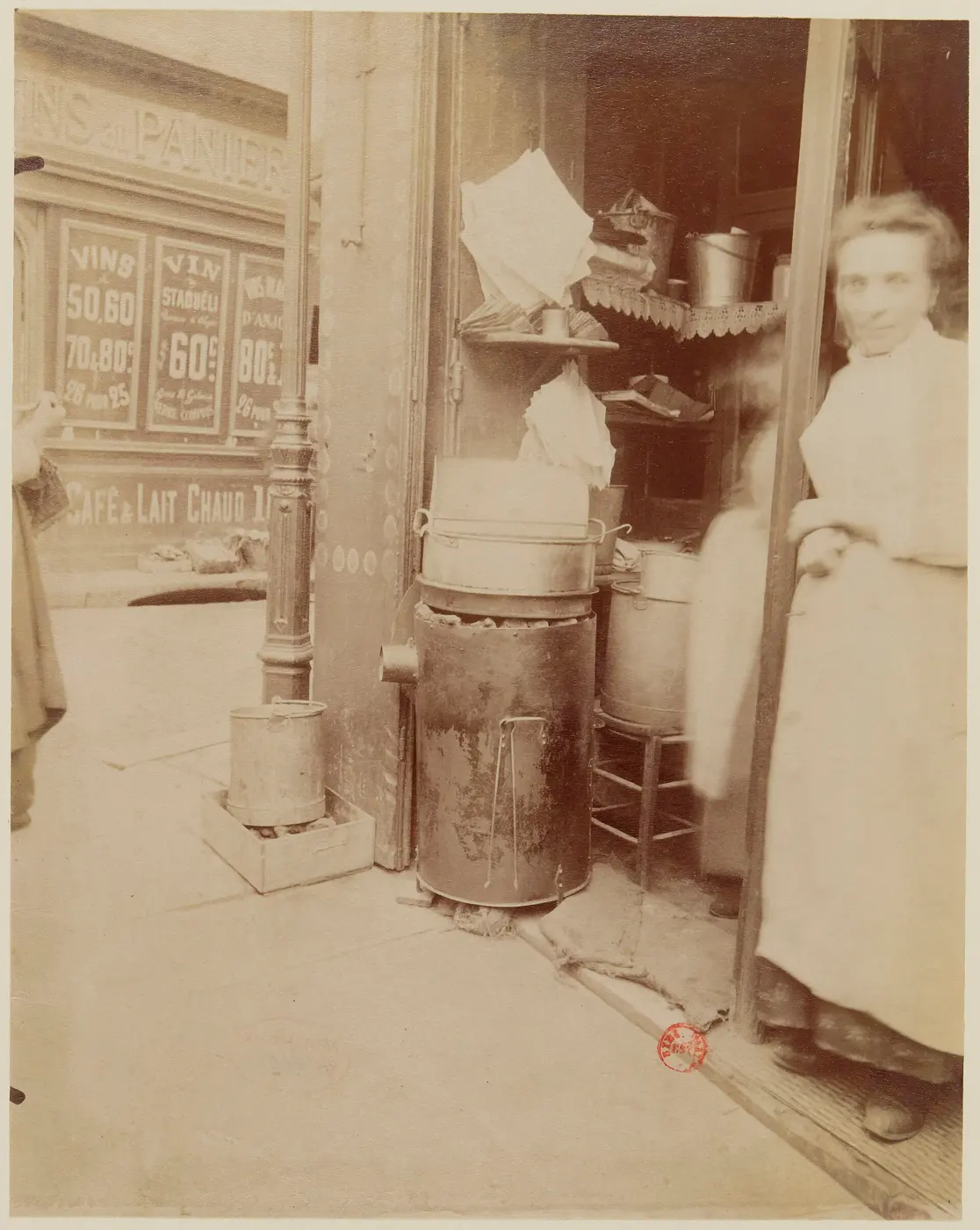
Where, then, did fries come from? Leclercq’s answer is Paris. In the 1780s, women selling potato fritters set up shop on the Pont Neuf, the old bridge across the Seine. By about 1800, they seem to have started dropping plain slices of raw potato into hot fat.
By the 1830s, fried potatoes had become a symbol of working-class Paris. On the Boulevard du Temple, lined with theaters, boys munched them during intermissions, and the woman frying potatoes on the street corner turned up again and again in novels and plays.
The shape changed, too. Thin rounds came first, but they tend to stick together. According to Leclercq, sticks appeared at Paris street stalls by 1840 at the latest, and cookbooks caught up about a decade later.

Into Belgium in 1844
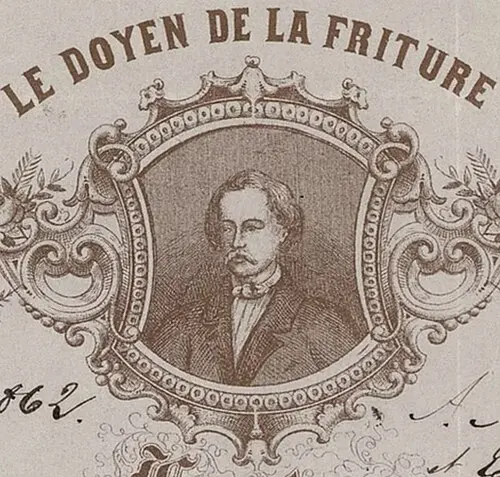
The man who brought fries to Belgium, Leclercq argues, was Frédéric Krieger, a Bavarian who learned to make them around 1842 while working at a rotisserie in Montmartre. In 1844 he opened Belgium’s first fry stand, advertising “fried potatoes in the Paris style.” Trading as Monsieur Fritz, he prospered and inspired many imitators.
From there, Belgium developed a fry culture of its own. Stalls selling mussels and fries multiplied at fairs in the 1870s, and the first written description of double frying appears in a Belgian teaching manual from 1889. Born in Paris, raised in Belgium: the Belgian claim, Leclercq says, confuses culture with origin.

What does “French” mean?
According to the British word historian Michael Quinion, the phrase “French fried potatoes” first appears in an English cookbook in 1856, though the recipe described thin slices, closer to potato chips. The earliest American example Quinion found is in a newspaper from 1880, and the shortened form “French fries” was in use by the early 20th century.
Some say “French” here is not the country at all but the verb “to french,” meaning to cut into thin strips. But that verb is recorded much later than “French fried potatoes.” Another story says American soldiers in Belgium during World War I mistook it for France and named the fries accordingly. That cannot be right either, since the name was already in use.
Then there is Thomas Jefferson, said to have had his chef make potatoes “in the French manner.” According to a research librarian at Monticello, Jefferson’s home, a recipe probably dating from his presidency does describe “pommes de terre frites à cru, en petites tranches,” potatoes fried raw in small slices. But nobody at the Jefferson archives knows of any such request to his chef.