Did Galileo really say “And yet it moves”?
There’s no reliable record that he did. The story first appeared in print in 1757, more than 120 years after his trial.
1757
Rome, June 1633. Galileo Galilei, 69 years old, knelt before the Inquisition and swore to abandon the idea that the Earth goes around the Sun. But as he got up, the story goes, he stamped his foot and muttered under his breath: Eppur si muove, “And yet it moves.”
It is the perfect scene of scientific defiance, retold countless times. Yet no record from Galileo’s own time shows that he ever said it.
What happened at the trial
The trouble began with Galileo’s Dialogue Concerning the Two Chief World Systems, printed in Florence in February 1632. The book has its characters debate Copernicus’s view that the Earth moves against the older, Earth-centered picture. According to a chronology compiled by Rice University’s Galileo Project, Pope Urban VIII halted the book’s distribution that summer, and in the fall the case was handed to the Inquisition.
Galileo reached Rome on February 13, 1633. He was questioned from April onward, and in June he was examined under a formal threat of torture. The verdict: he was vehemently suspected of heresy. At the convent of Santa Maria sopra Minerva, he was made to abjure his “errors.”
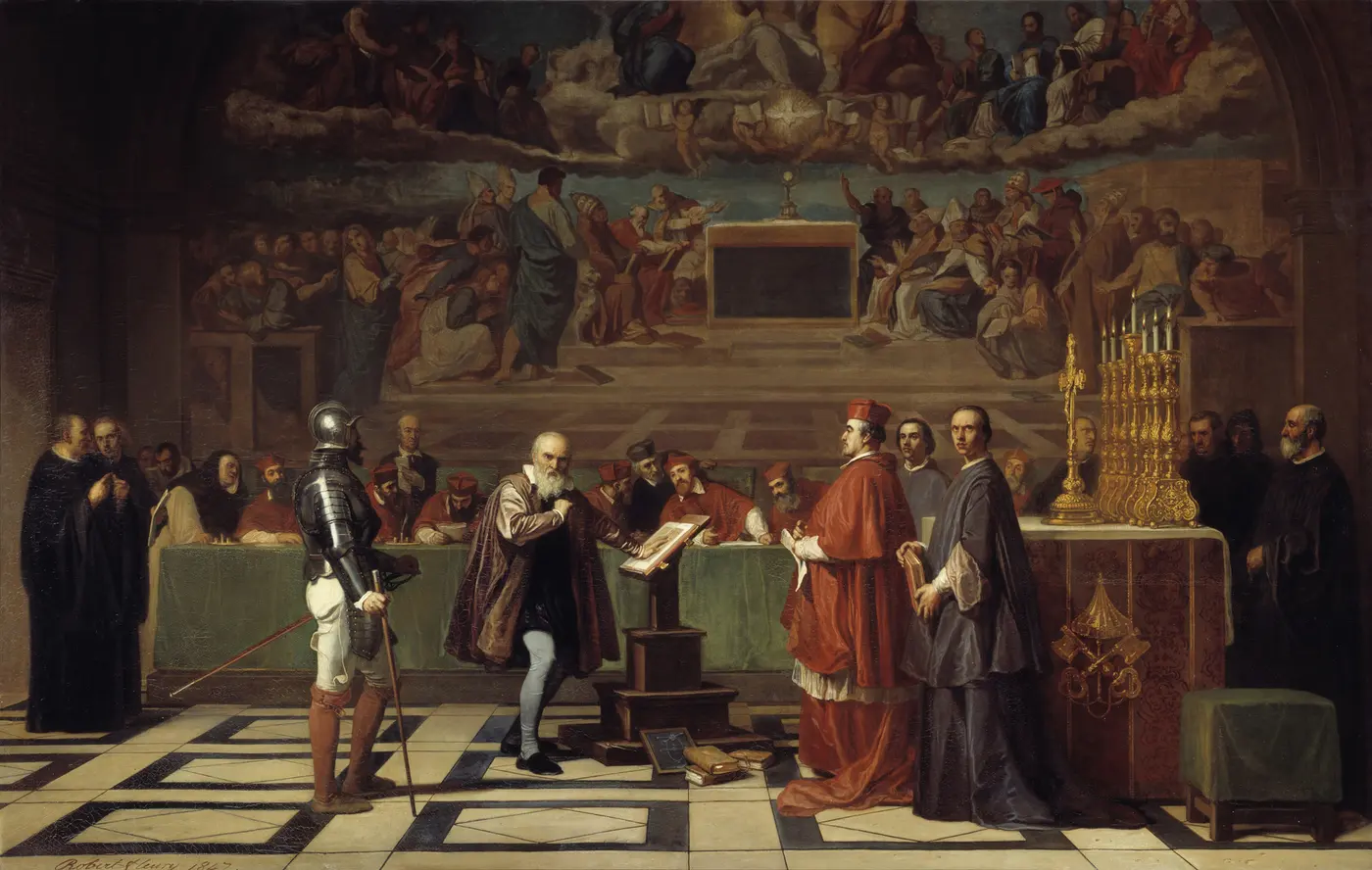

He was then held at the residence of the Archbishop of Siena, and in December of that year he was allowed to return to his own villa at Arcetri, outside Florence. He lived there under house arrest until his death in January 1642.
First in print in 1757
So where did “And yet it moves” come from? Antonio Favaro, the Italian scholar who edited Galileo’s complete works, traced the earliest printed version to The Italian Library, published in London in 1757.
Its author, Giuseppe Baretti, was an Italian writer living in London, introducing Italian authors to English readers. In the entry on Galileo’s Dialogue, Baretti wrote that Galileo “was in the inquisition for six years, and put to the torture, for saying, that the earth moved. The moment he was set at liberty, he looked up to the sky and down to the ground, and, stamping with his foot, in a contemplative mood, said, Eppur si move, that is, still it moves, meaning the earth.” In this version, he says it on being released, not in front of his judges.
Baretti was writing 124 years after the trial and 115 years after Galileo’s death. And his account gets the basics wrong: Galileo was not held for six years, and he was threatened with torture, not tortured. In a 2020 article for Scientific American, the astrophysicist Mario Livio noted that even setting those embellishments aside, a book published more than a century later is weak evidence.
A painting with the words on it
In the 20th century, though, evidence seemed to turn up. In 1911 Favaro received a letter from Jules Van Belle of Roeselare, Belgium, who said he owned a painting dated 1643 or 1645.
It showed Galileo in prison, apparently tracing the Earth’s orbit around the Sun on his cell wall, with the words “E pur si move” written beneath. Based on a hard-to-read signature, Van Belle attributed it to the Spanish painter Bartolomé Esteban Murillo. If he was right, the story had been circulating within a year or two of Galileo’s death. Newspapers picked up the discovery, and some scholars changed their minds and concluded that Galileo had said the words after all.
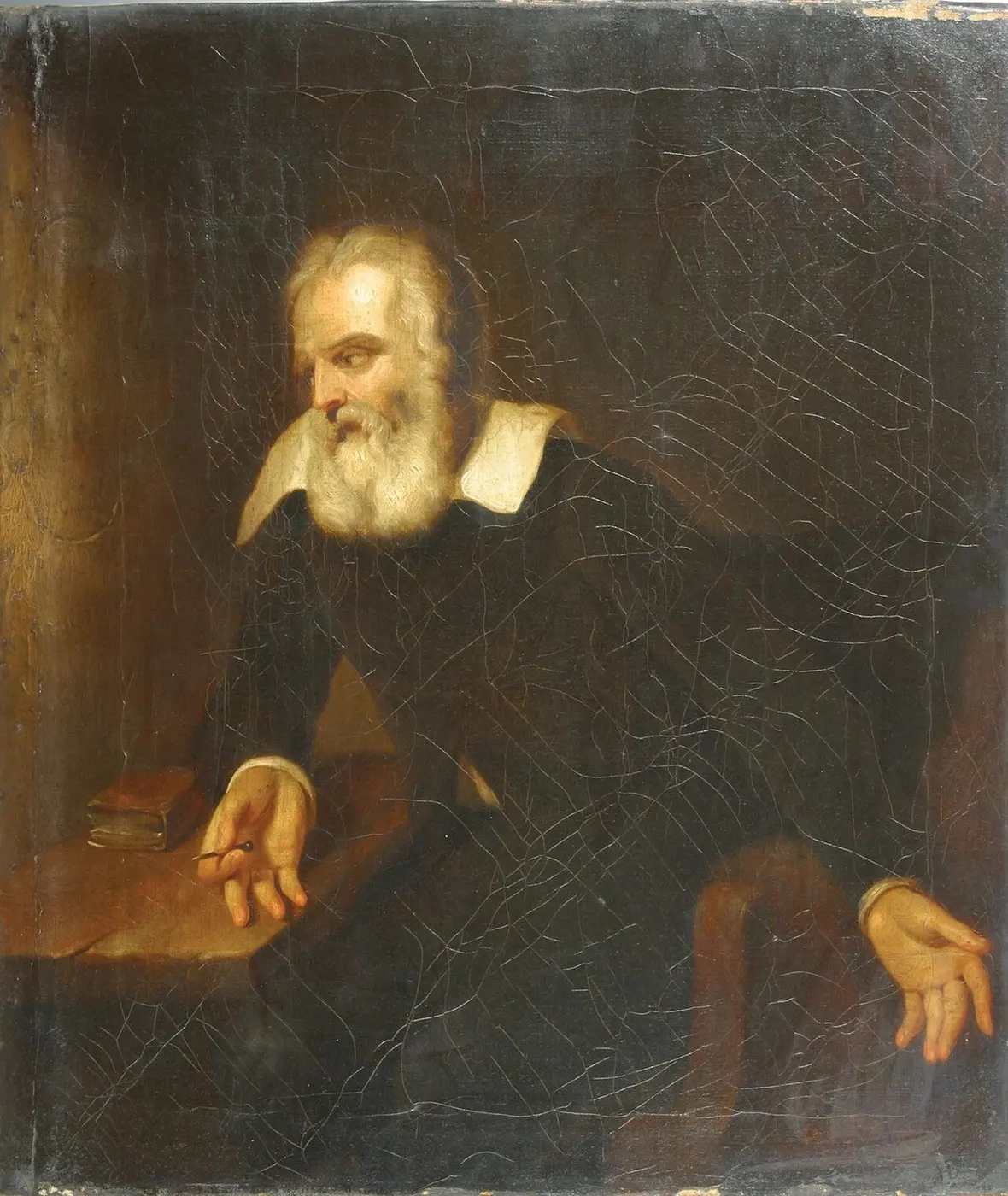

Livio set out to track the painting down. He sent photographs to four Murillo specialists, and all of them doubted that Murillo had painted it; one dated it to the 19th century. He also found that a nearly identical painting, Galileo in Prison, is held by the municipal museum of Sint-Niklaas in Belgium and is documented as the work of the Flemish painter Romaan-Eugeen Van Maldeghem in 1837. When Van Belle’s painting was auctioned in Antwerp in 2007, the auction house judged it to be 19th century and found neither a date nor a signature. It is hard to see it as evidence from Galileo’s lifetime.
Reconciliation after 359 years
The trial itself was formally revisited near the end of the 20th century. In 1979 Pope John Paul II called on theologians, scientists and historians to reexamine the Galileo case, and a study commission was set up in 1981.
On October 31, 1992, after receiving the commission’s findings, the pope gave an address acknowledging that the theologians of Galileo’s day had erred in treating the literal sense of Scripture as settling how the physical world works. He called the clash a “tragic mutual incomprehension” and said that this painful misunderstanding now belonged to the past. It had been 359 years since the trial.
No evidence has turned up that Galileo ever said “And yet it moves.” But few words capture so well how later generations came to see his trial.