Did an army really lose a war to emus?
In 1932, Australian soldiers with machine guns were sent to cull emus. They killed far fewer than hoped, and the press and politicians mocked it as the “emu war.”
10rounds
In November 1932, soldiers armed with machine guns were sent into the wheat country of Western Australia. Their enemy was not a foreign army but flocks of emus that were trampling the crops. The emu, found only in Australia, is the second-tallest bird in the world after the ostrich.
Even at the time, newspapers and members of parliament called the operation the “emu war,” and it became a running joke. Today it is still retold online as the war in which an army lost to birds. So what actually happened?
Emus in the wheat fields
After World War I, the Australian government gave returning soldiers land in Western Australia to farm. But in the early 1930s, the Great Depression drove wheat prices down, and drought made things worse. Emus that could no longer find water and food inland moved into the wheat fields, reportedly as many as 20,000 of them.
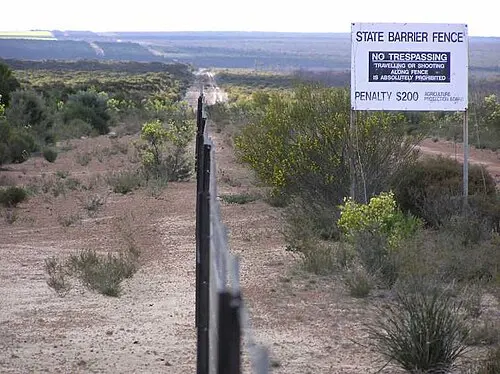
According to the federal parliamentary record of November 1932, a deputation of soldier settlers went to the Minister for Defence, Sir George Pearce. They told him that thousands of emus were damaging rabbit-proof fences and “devastating crops by rolling on them.” Ordinary firearms were useless, they said, because the birds scattered as soon as they were shot at. Machine guns, they argued, would work.
Pearce agreed. He sent Major G. P. W. Meredith of the Royal Australian Artillery and two other soldiers with two Lewis machine guns and 10,000 rounds of ammunition. The settlers were to pay for the ammunition, and the state government for the rail fares.

Scatter, sprint and stand guard
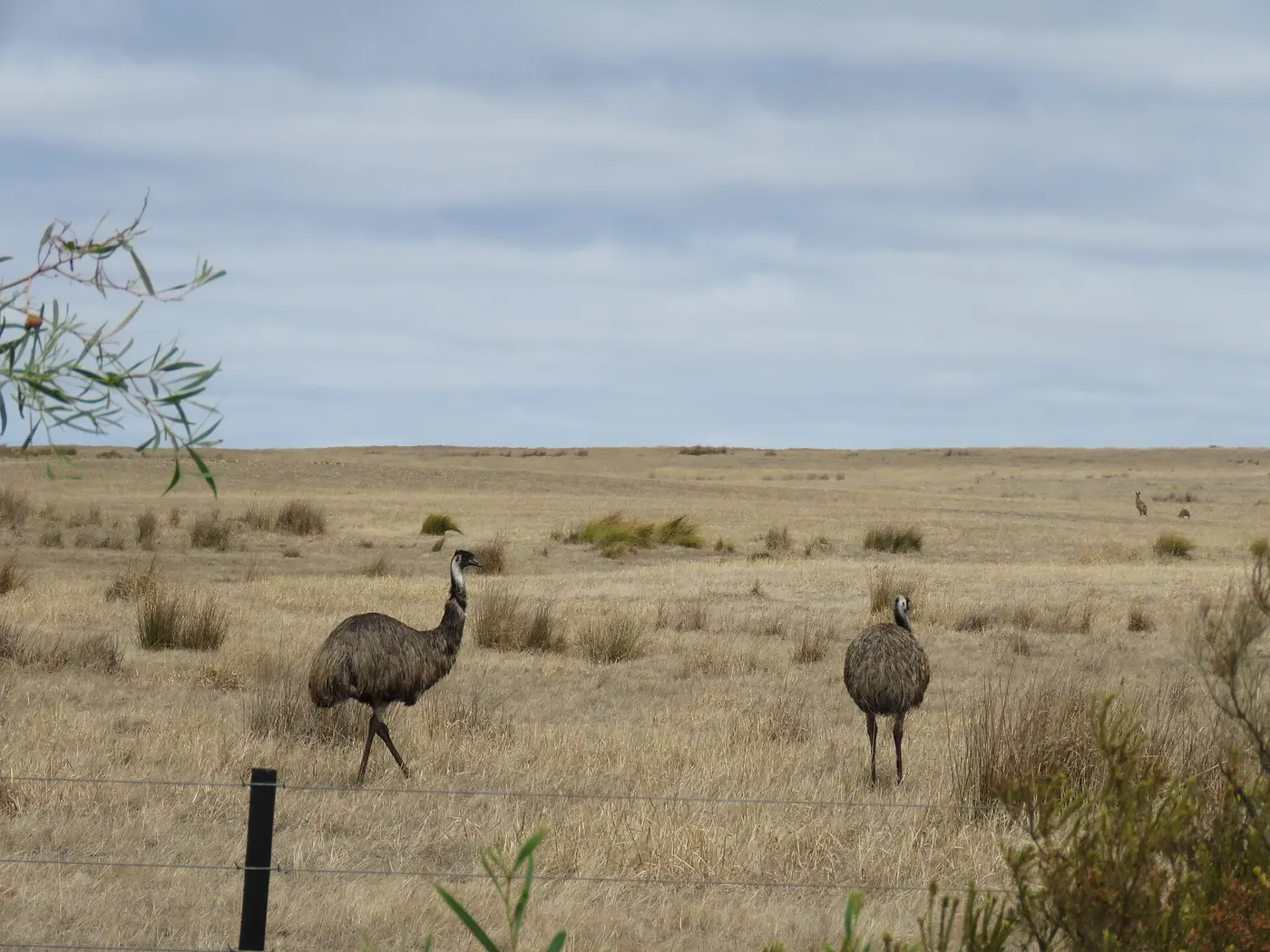
In early November, the unit went into action in the Campion district. The emus did not cooperate. According to a look back at the campaign published in 1953 by Sydney’s Sunday Herald, the soldiers once set up an ambush at a dam toward which a flock of more than 1,000 birds was said to be heading. They waited until the birds were 100 yards (about 90 meters) away and opened fire from several directions, but fewer than a dozen emus fell. Before the guns could be reloaded, the flock was not only out of range but well on its way to being out of sight.
The same article quotes an army observer on the fourth day, who sadly admitted that “each pack seems to have its leader now—a big black-plumed bird which stands fully six feet high and keeps watch while his mates carry out their work of destruction and warns them of our approach.” At one point a machine gun was reportedly mounted on a truck to chase the birds, but the truck could not keep up and the ride was too rough to fire.
“Who is responsible for this farce?”
The operation was soon raised in Parliament. On November 8, in the House of Representatives, Mr. Thorby, the member for Calare, asked the prime minister about press reports that emus were being hunted with machine guns mounted on lorries: “who is responsible for this farce, and who is footing the bill?”
The same day, Pearce ordered the soldiers withdrawn. About 2,500 rounds are said to have been fired by then. But the settlers were alarmed at the recall, and Melbourne’s Argus reported their view that the gunners had just “begun to make an impression on the ravaging hordes.” Western Australia’s premier also pressed for the operation to resume, and after receiving a report that upwards of 300 emus had been killed, Pearce sent the unit back a few days later.
On November 22, another member asked in the House who was paying for “what is known as the ‘Emu war,’” and whether the operations had been “an expensive failure.” The government replied that some hundreds of emus were being destroyed and that there was no additional cost to the Commonwealth.
Ten bullets per bird
When the operation ended on December 10, Meredith reported 986 confirmed kills using 9,860 rounds, exactly 10 rounds per bird. He also claimed that 2,500 wounded birds had later died, though that figure has been questioned.
Meredith was clearly impressed by the birds’ toughness. According to the same 1953 article, he remarked: “If we had a military division with the bullet-carrying capacity of these birds it would face any army in the world. They can face machine-guns with the invulnerability of tanks.”
So did the army lose? The soldiers certainly killed hundreds of birds, but that was a small fraction of the estimated 20,000 roaming the wheat belt. Machine guns and trained gunners could not rid the farms of the birds. Farmers later asked for military help again, but the government did not send it. Instead, Western Australia relied on bounties paid for emu beaks and on long emu-proof fences.