Can elephants recognize themselves in a mirror?
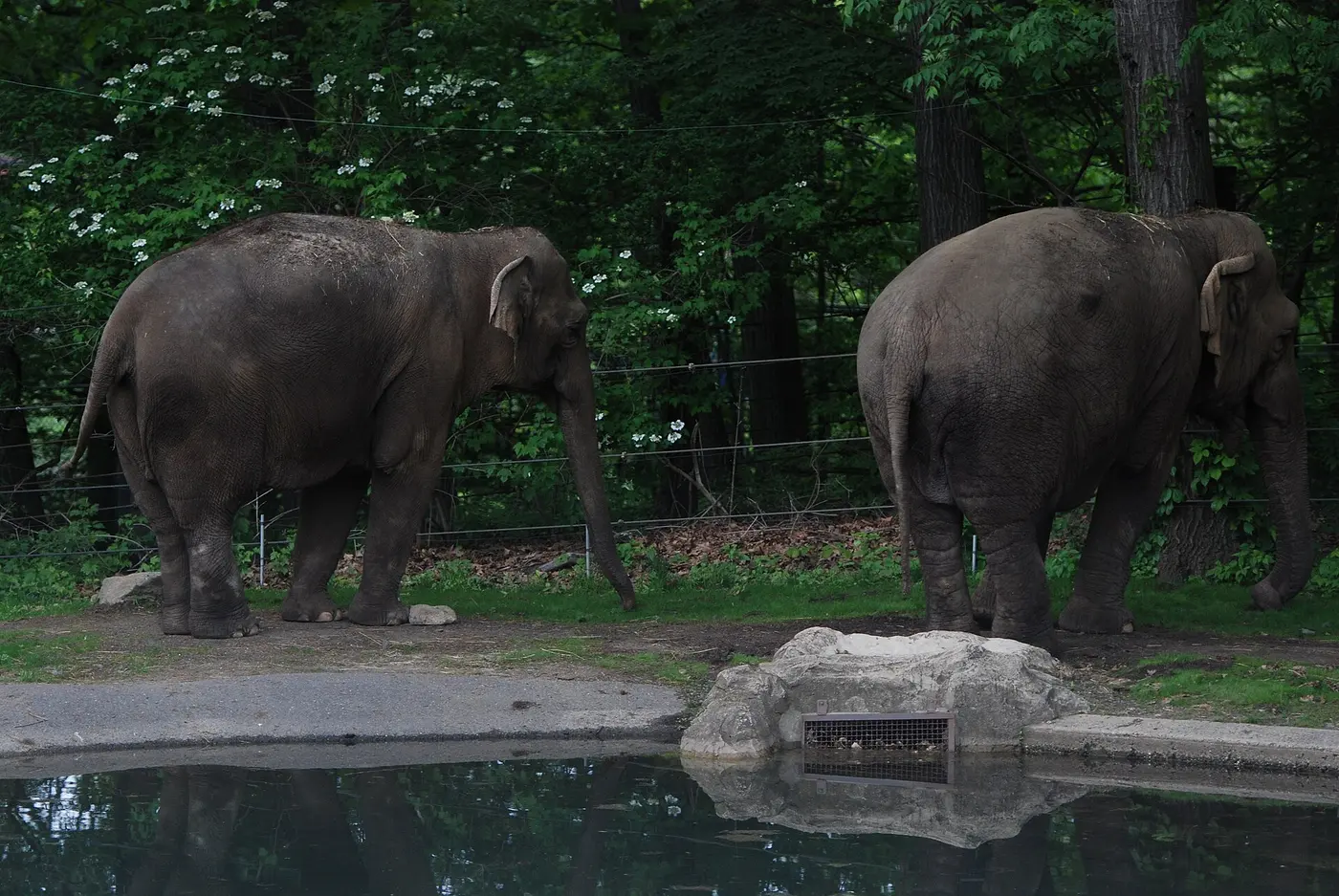
At least some can. In a study published in 2006, an Asian elephant named Happy looked in a mirror and touched a mark on her own head with her trunk, passing the classic “mirror test.”
2.4 m
Recognizing yourself in a mirror is actually a rare ability. Many animals treat their reflection as a rival and threaten it. Even human children don’t usually recognize themselves until they are about a year and a half old.
So what about elephants, famously social animals? In 2006, a team of American researchers offered an answer.
A spot of red dye
The standard way to find out is the “mark test,” or mirror test, devised by the American psychologist Gordon Gallup Jr. In 1970, Gallup let chimpanzees get used to a mirror, then, while they were under anesthesia, dabbed red dye on parts of their faces they could not see directly. When the chimps woke and looked in the mirror, they touched and examined the marked spots, something they could do only if they knew the face in the mirror was their own. Monkeys showed no such response. Gallup’s paper in Science launched decades of mirror research.
Animals that come to recognize themselves usually go through the same stages: treating the reflection as another animal, inspecting the mirror itself, testing it by moving and watching the reflection follow, and finally using it to inspect their own bodies.
An 8-foot mirror
Before 2006, no elephant had passed. In a 1989 experiment, two Asian elephants showed no sign of recognizing themselves, but the mirror was small and out of reach of their trunks.
Joshua Plotnik and Frans de Waal of Emory University, together with Diana Reiss, known for her mirror studies of dolphins, reasoned that elephants needed a mirror they could explore up close. At New York’s Bronx Zoo they built an elephant-proof mirror about 2.4 meters (8 feet) high and wide. The subjects were three female Asian elephants in their mid-30s: Happy, Maxine and Patty.
None of the three ever treated the reflection as another elephant. Instead, Maxine and Patty tried to climb the wall to look behind the mirror and knelt to reach underneath it with their trunks. Soon all three were moving their trunks and bodies up and down and from side to side in front of the mirror and bringing food over to eat right in front of it. Maxine put her trunk into her mouth as if to inspect it, and once pulled her ear toward the mirror. The elephants were using the mirror to look at themselves.

One out of three
Then came the mark test. A keeper painted a white X, about 12 cm (5 inches) across, on one side of each elephant’s head, above the eye, and on the other side a “sham” mark that matched it in smell and feel but could not be seen. An elephant that touched only the visible mark must have noticed it in the mirror.
On the first day of marking, Happy walked in and out of view of the mirror a few times, then touched the white X with the tip of her trunk again and again, at one point standing right in front of the mirror to examine it. All 12 head touches she made at the mirror or just after leaving it landed on or near the visible mark. She never touched the sham mark.
Maxine and Patty showed no interest in either mark, though the researchers believe both had reached the stage of using the mirror to inspect themselves. Animals that live covered in mud and dust may simply not care about a smear of paint. Even among chimpanzees, some studies find that fewer than half pass. The researchers published their findings in the Proceedings of the National Academy of Sciences in 2006.
Who else passes?
Among mammals, besides humans, the animals thought to pass the mirror test are great apes such as chimpanzees and orangutans, bottlenose dolphins, reported by Reiss and Lori Marino in 2001, and elephants. All have large brains and live in complex societies.
In 2008, a German team reported that two of five magpies, members of the crow family, tried to remove a colored sticker from their throats while looking in a mirror, the first such result outside mammals. In 2020, however, a Spanish team repeated the experiment with more magpies and could not reproduce it.
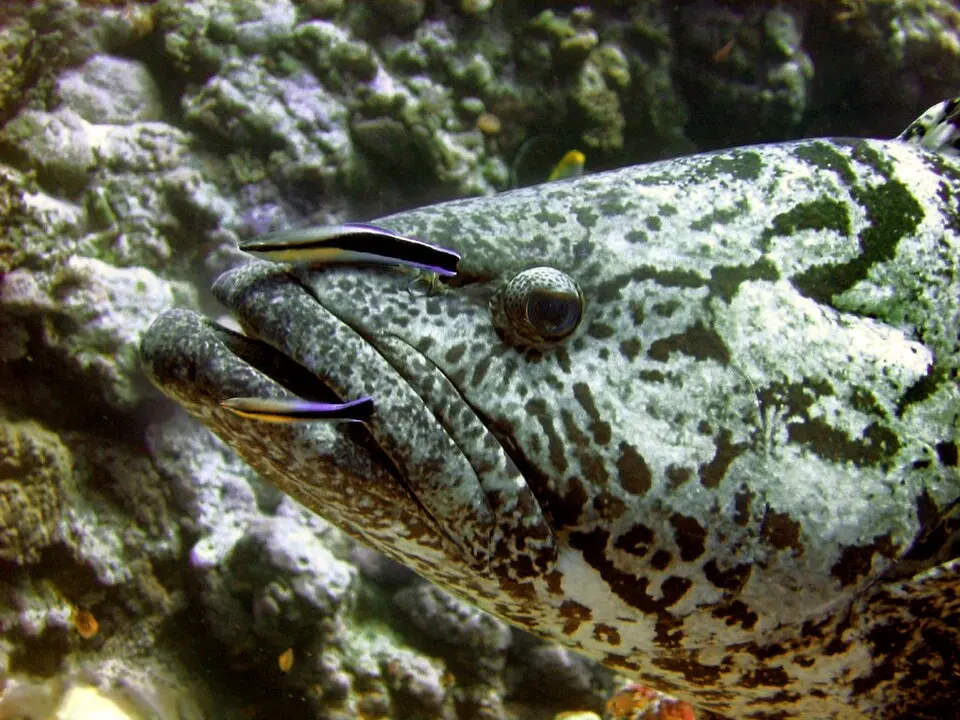

An even bigger argument followed a 2019 study led by Masanori Kohda of Osaka City University. His team put a small brown mark under the throat skin of bluestreak cleaner wrasse, and three of four marked fish, after looking in a mirror, scraped their throats on the sandy bottom. They did not do so when the mark was transparent or when there was no mirror. The journal noted that the reviewers had been split. Does a fish know itself, or does the mirror test need rethinking? Kohda’s team has since reported that all 14 fish in a new experiment did the same, and that the fish can pick out their own faces in photographs. The debate goes on.