Did cola start out as a medicine?
Pretty much. Its inventor was a pharmacist, and early ads sold it as a “brain tonic” that cured headaches and more.
On a hot day, there is nothing quite like a long swig of ice-cold cola. The sharp fizz and that distinctive sweet aroma are now available practically anywhere on Earth.
Yet cola got its start not in a restaurant or a candy shop but in a pharmacy. Early Coca-Cola was sold with the promise that it would ease headaches and fatigue.
A wounded veteran turned pharmacist
Coca-Cola was created by John Pemberton, a pharmacist in Atlanta, Georgia.
Pemberton fought for the Confederacy in the American Civil War and suffered a saber wound to the chest in a battle in April 1865. He became dependent on the morphine he took for the pain and is said to have struggled with the addiction for the rest of his life. Part of what drove his work on remedies, it is said, was the hope of finding a painkiller that could replace morphine.
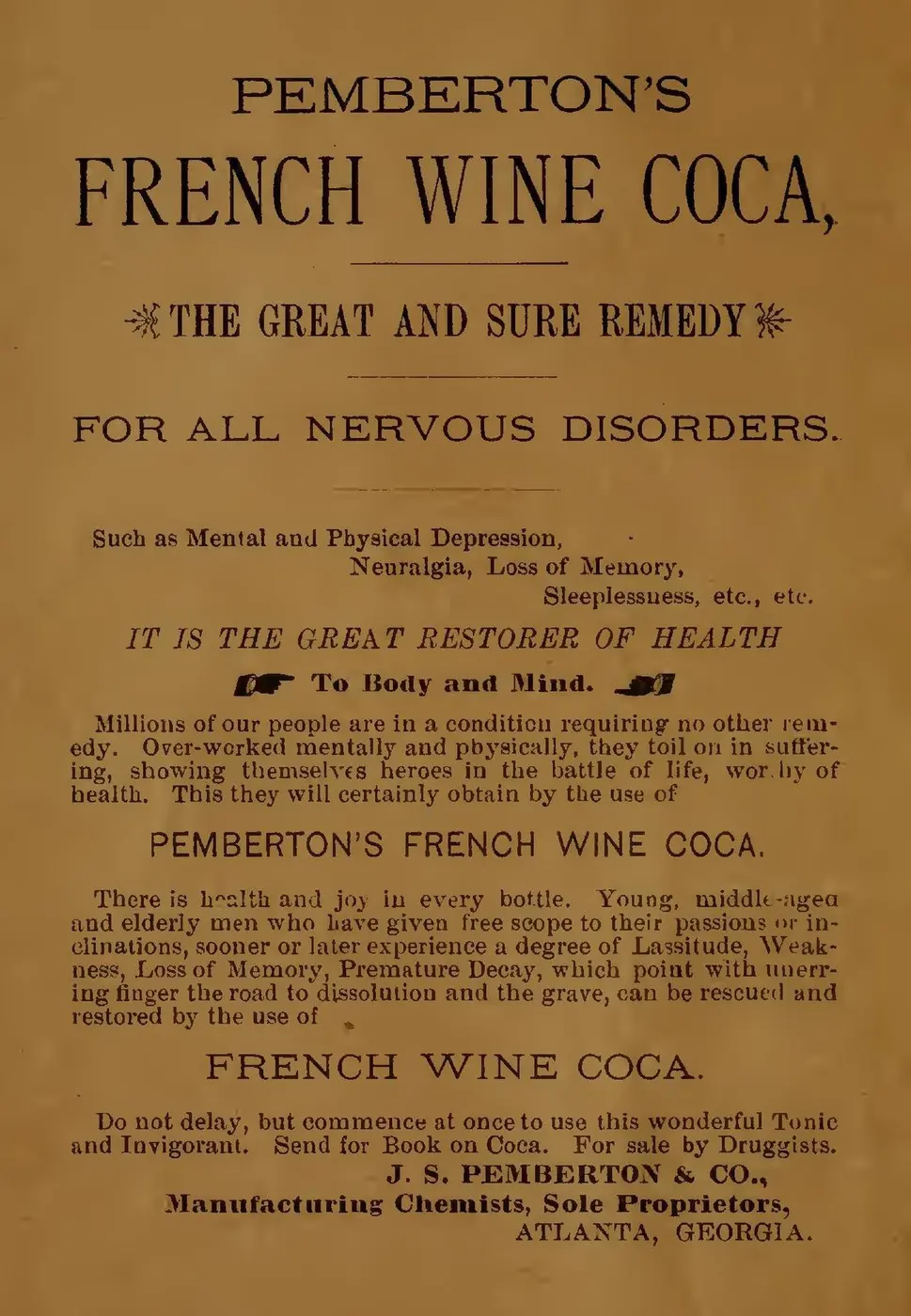
In 1885, Pemberton launched a tonic called Pemberton’s French Wine Coca. It was wine laced with extracts of coca leaves, native to South America, and kola nuts, native to West Africa, and was reportedly modeled on Vin Mariani, a coca wine that was all the rage in France. Coca leaves contain cocaine and kola nuts contain caffeine, both of which give a lift.

An alcohol-free drink for a dry town
Then, in 1886, Atlanta and the surrounding county went dry, banning the sale of alcohol. A medicine made with wine was suddenly a hard sell. So Pemberton developed an alcohol-free syrup, to be mixed with carbonated water.
On May 8 of that year, the new drink went on sale at Jacobs’ Pharmacy in Atlanta for five cents a glass. American drugstores of the time had soda fountains, counters where syrups were mixed with fizzy water and served on the spot. Pemberton’s partner and bookkeeper, Frank Robinson, named the drink Coca-Cola after its two key ingredients, and he also penned the flowing script logo still used today. In its first year it sold an average of only about nine glasses a day.
Early ads issued under Pemberton’s name called Coca-Cola an “intellectual beverage” and a “temperance drink,” describing it as a valuable brain tonic and a cure for nervous complaints such as headaches, neuralgia and melancholy.
Medicine or soft drink?
Pemberton died in 1888, and the business passed to the Atlanta businessman Asa Candler. Under Candler, Coca-Cola spread across the country.
The turning point came in 1898. To pay for the Spanish–American War, the US government imposed a tax on medicines, and Coca-Cola, which had been advertised as a remedy for headaches and exhaustion, was taxed as one. The company sued to get the money back, insisting its product was just a soft drink, and won in 1902.
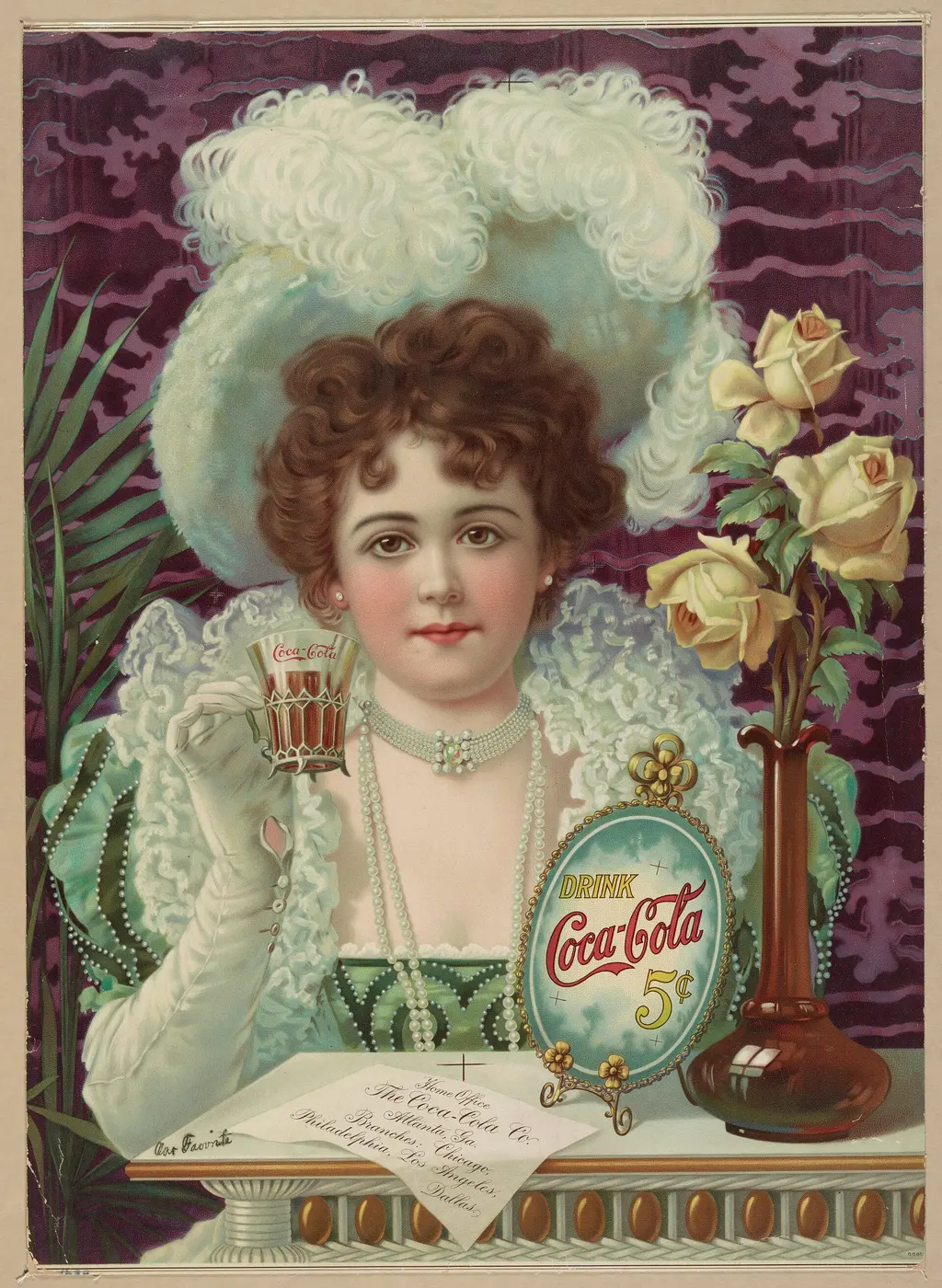

In that very courtroom, however, Candler admitted that the company had stopped advertising Coca-Cola’s medicinal benefits in 1898 precisely to avoid the tax, and that the ingredients had not changed one bit. Whether it was a medicine or a drink, in other words, came down largely to how it was advertised.
Early Coca-Cola is also thought to have contained a tiny amount of cocaine from its coca leaves. In the early 20th century, the company switched to coca leaves with the cocaine removed.
Pepsi came from a pharmacy too
Coca-Cola was not the only drink born in a drugstore. In 1893, Caleb Bradham, a pharmacist in North Carolina, began selling a beverage he called Brad’s Drink at his pharmacy. Renamed Pepsi-Cola in 1898, it was said to aid digestion, and the name is thought to have been inspired in part by “dyspepsia,” meaning indigestion.
Dr Pepper, too, was dreamed up in 1885 by Charles Alderton, a pharmacist working at a drugstore in Texas. Many of America’s classic soft drinks got their start at the pharmacy counter.