Do carrots help you see in the dark?
Only if you are short of vitamin A. For people who already get enough, eating more carrots will not improve their night vision.
20
“Eat your carrots, they’re good for your eyes.” Plenty of children have heard that one at the dinner table. In the English-speaking world it often comes with an extra promise: eat enough carrots and you will be able to see in the dark.
The idea has a famous backstory. During World War II, so the story goes, Britain claimed that its night-fighter pilots owed their uncanny success to a diet of carrots. Their real secret was a new airborne radar, and the carrot tale was cooked up to keep the Germans from finding out. It is a great story. But look closely, and the backstory turns out to be shakier than the vegetable itself.
The pilot called “Cat’s Eyes”
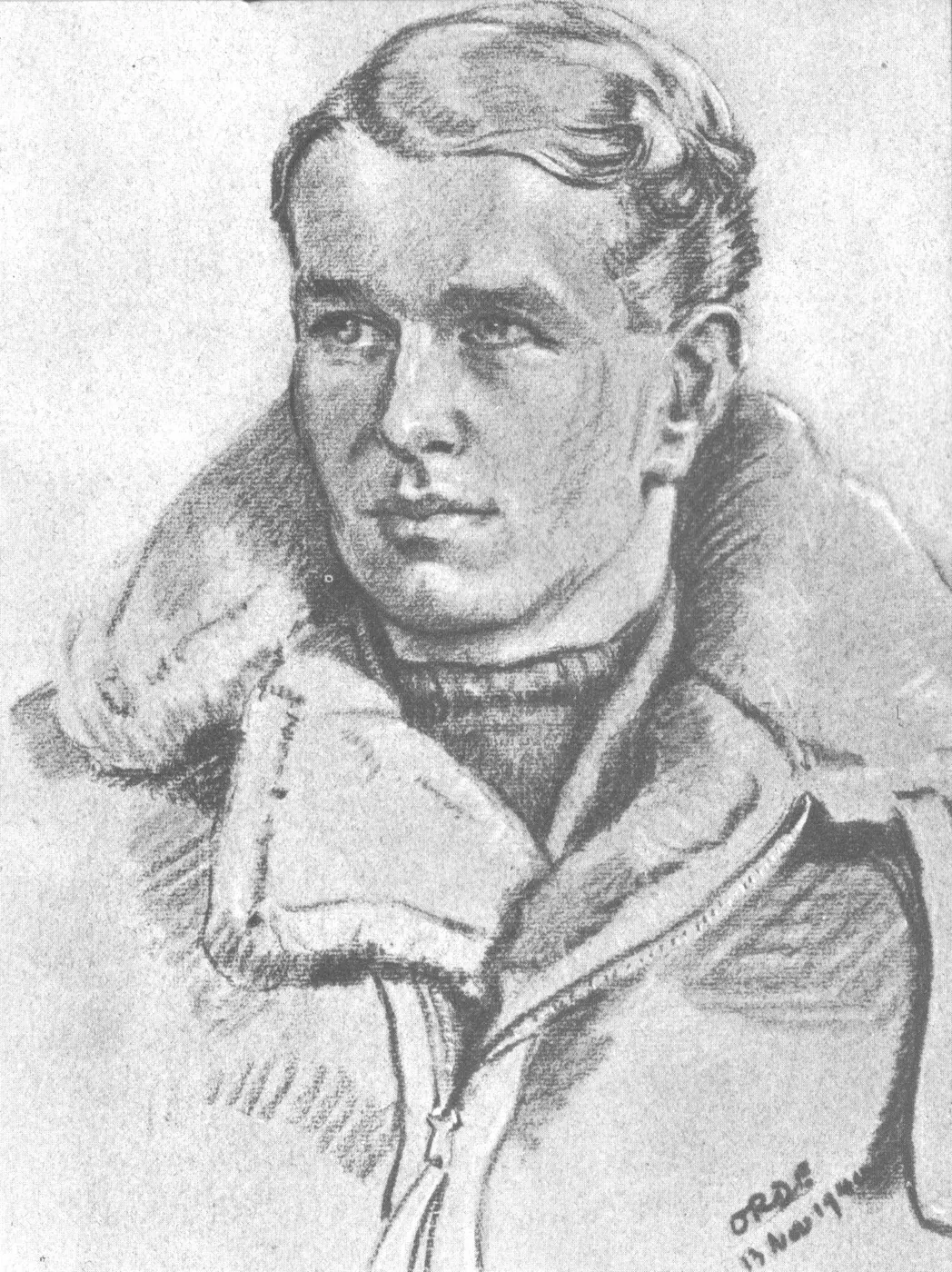
The hero of the tale is John Cunningham (1917–2002) of the Royal Air Force. Flying night fighters with No. 604 Squadron, he shot down a German bomber in November 1940 with the help of airborne interception radar, at a time when the Luftwaffe was bombing London and other cities night after night. By the end of the war he had 20 victories to his name.
Airborne radar was a military secret. The press dubbed Cunningham “Cat’s Eyes” for his ability to find enemy planes in the dark, and explained that he ate plenty of carrots, which gave him vitamin A and sharp night vision. In reality, what found the enemy in the dark was radar: ground stations guided him toward the bombers, and the man in the seat behind him, his radar operator Jimmy Rawnsley, tracked them on the aircraft’s own set.

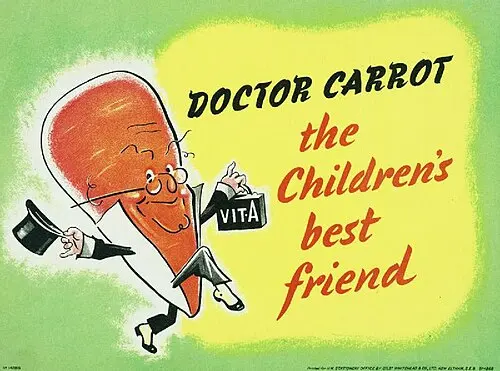
At the same time, Britain’s Ministry of Food was busy promoting carrots. With food rationed, a vegetable that could be grown in huge quantities at home was too useful to ignore. Posters declared that “Carrots keep you healthy and help you to see in the blackout,” the nightly darkness imposed so that city lights would not guide enemy bombers. A cartoon character called Doctor Carrot, complete with spectacles, joined the campaign.
Was it really a radar cover-up?
So was the carrot story a deliberate trick aimed at the Germans? Bryan Legate of the Royal Air Force Museum in London told Scientific American in 2014 that while the Air Ministry “were happy to go along with the story,” they “never set out to use it to fool the Germans.” German intelligence, he pointed out, was well aware of Britain’s ground-based radar stations, so radar in aircraft would hardly have come as a shock.
The museum has also told the World Carrot Museum, a British website devoted to the history of the vegetable, that it has found no official paperwork or correspondence in its collections relating to any organized attempt by the Air Ministry or the RAF to convince the Germans that carrots were behind their night-fighter successes.

In other words, what is well documented is that wartime Britain made a great deal of the idea that carrots help you see in the dark, and that the idea became linked with Cunningham’s exploits. The claim that the main aim was to deceive Germany is a good story, but no documents have been found to back it up. The real target audience seems to have been people at home who needed to eat more of a plentiful vegetable.
When vitamin A runs short
Does that mean carrots have nothing to do with eyesight? Not at all.
The orange pigment in carrots, beta-carotene, is turned into vitamin A in the body. Vitamin A is needed to make rhodopsin, the pigment in the retina that detects dim light. When vitamin A runs short, people find it hard to see in the dark, a condition called night blindness. The World Health Organization describes night blindness as one of the first signs of vitamin A deficiency, and estimates that 250,000 to 500,000 children who lack vitamin A go blind every year.
Carrots can genuinely help people who are deficient. In a study published in the American Journal of Clinical Nutrition in 2005, pregnant women in Nepal who had night blindness were given carrots or other foods containing vitamin A or its building blocks six days a week for six weeks. Their eyes’ ability to adjust to the dark improved until it was no different from that of pregnant women without night blindness.
But that only works if you are short of vitamin A to begin with. If you already get enough, eating extra carrots will not push your vision beyond normal. According to Japan’s Standard Tables of Food Composition, 100 grams of raw, peeled carrot contains carotene equivalent to 630 micrograms of vitamin A. Anyone eating a reasonable amount of colorful vegetables has no need to chew through a mountain of carrots in pursuit of cat’s eyes.