Do camels store water in their humps?
No. A camel’s hump is made of fat, not water. Camels go without drinking for long stretches because their bodies save water in other ways, and because they can drink enormous amounts at once.
30%
Camels, the “ships of the desert,” can carry loads for days in blistering heat without a drink. Surely the secret lies in the hump on their back, a tank full of water. That, at least, is how many of us picture it.
In fact, a camel’s hump holds fat, not water. What lets camels go so long without drinking is not the hump at all, but a whole set of adaptations spread throughout the body.
A hump full of fat
There are two kinds of camel: the one-humped dromedary and the two-humped Bactrian camel. According to the San Diego Zoo, about 90 percent of the world’s camels are dromedaries, which today exist only as domestic animals. Bactrian camels include both domestic animals and a wild population that lives in the dry lands of China and Mongolia.
In both species, the hump is made of fat and the fibrous tissue that holds it together. As the Library of Congress explains, the hump is a reserve of nourishment for times when food is scarce. When a camel draws on that fat, the hump goes limp and droops, and with proper food and rest it returns to normal.
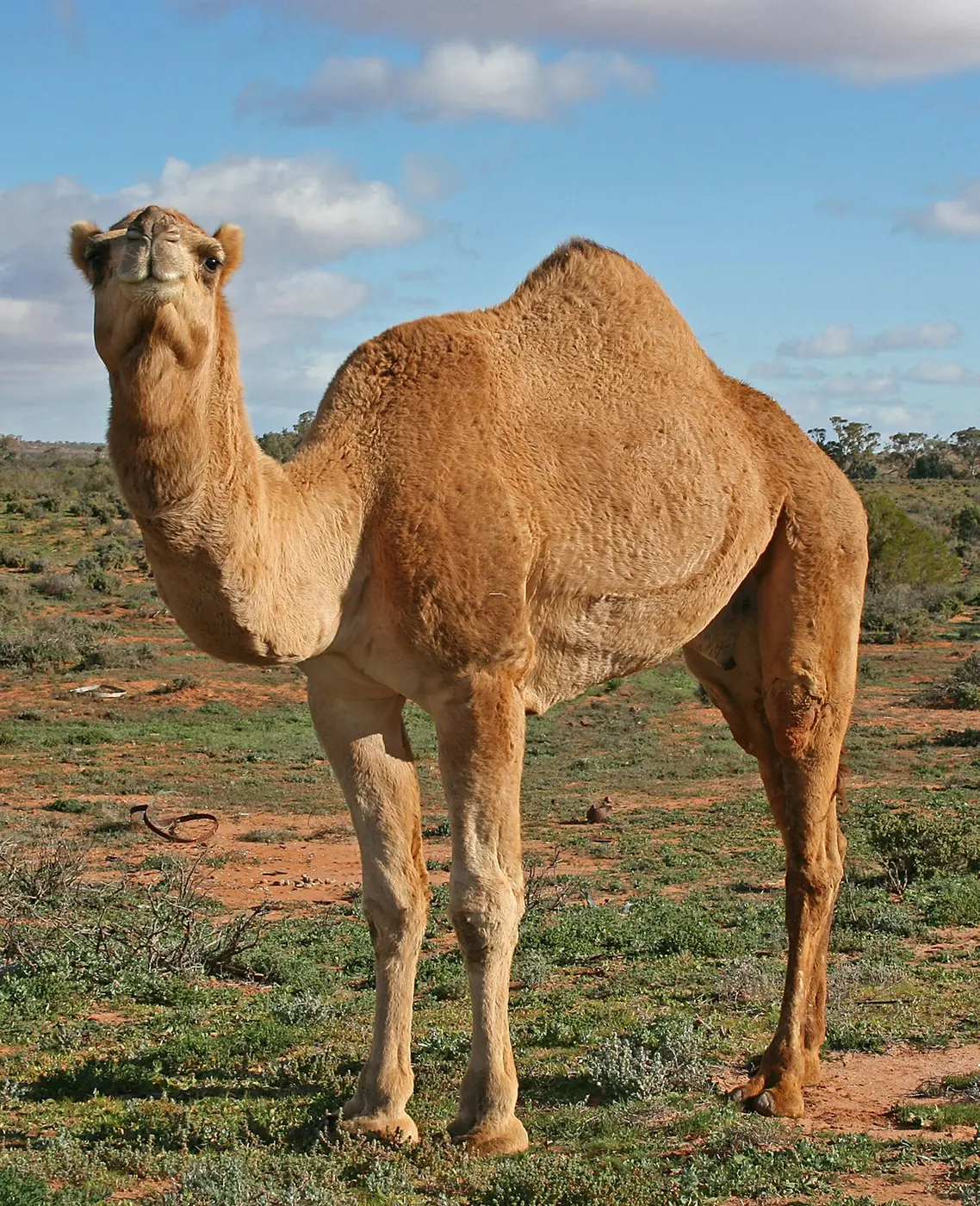

Keeping the fat in one place probably helps too. Fat wrapped around the whole body would trap heat like a blanket. According to San Diego Zoo materials, concentrating it in the hump means there is less heat-trapping insulation everywhere else.
Fat does make water, but…
Still, some people reasoned that the fat in the hump might turn into water in an emergency. And burning fat does produce water, along with carbon dioxide: a little more than a gram of water for every gram of fat. A well-stocked hump would seem to hold a lot of potential water.
The catch is that burning fat takes oxygen, and breathing in more oxygen means breathing out more moisture from the lungs. In dry desert air, that loss adds up. A 1964 paper in Nature noted that the hump had been ruled out as a water store, because the amount of water released by breaking down its fat does not match the water camels actually lose.
Refilling in ten minutes
So how do camels manage without water? The answer came from a team led by Knut Schmidt-Nielsen, a Norwegian-born American physiologist. In the 1950s, working in the Sahara, the researchers kept dromedaries without water and tracked their weight, food intake, urine and blood.
Their results, published in 1956, showed that a camel could lose water equal to 30 percent of its body weight and still withstand the fierce desert heat. Other mammals dehydrating in the heat may die of circulatory failure after losing just 12 percent. The camels also kept eating normally while deprived of water, which many animals do not. The longest any camel went without a drink on dry food in the summer heat was 17 days.
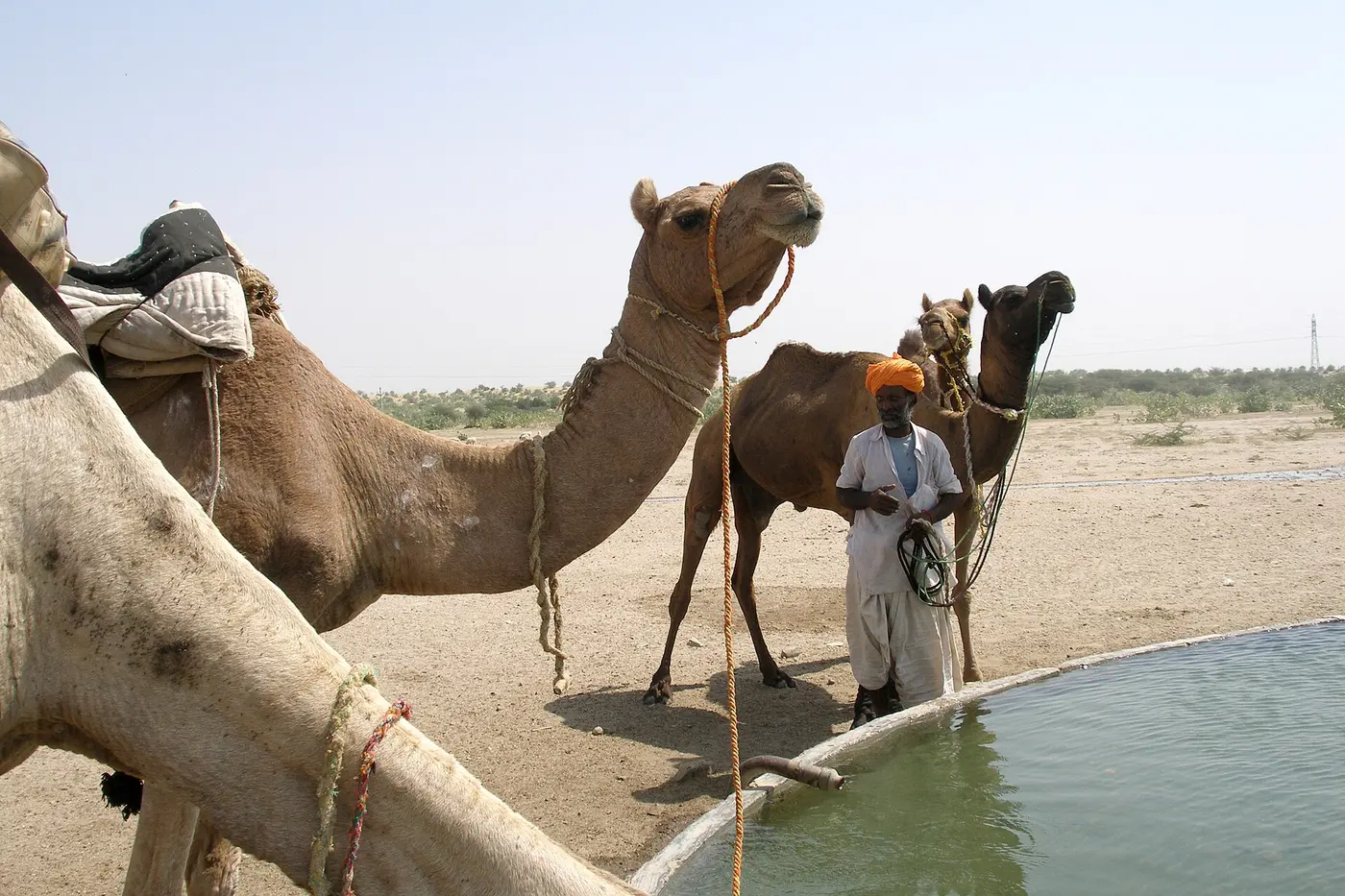

When the camels were finally offered water, they drank enough in about ten minutes to rehydrate completely. According to the San Diego Zoo, a camel can drink up to 145 liters (32 gallons) in a single session. That water goes into the blood and other body fluids, not the hump. A camel’s red blood cells are oval rather than round like those of other mammals, which is thought to help them survive a sudden flood of water without bursting.
Running hot to save water
The camel’s body is full of other water-saving tricks. The same team found that camels on a diet of dates and hay produced only 0.5 to 1 liter (about 1 to 2 pints) of urine a day, and their dung contained very little water.
The biggest saving comes from body temperature. A 1957 study by the team found that a resting camel’s temperature can range from about 34°C (93°F) to more than 40°C (104°F). In summer, a camel deprived of water could swing by more than 6°C (11°F) in a single day. Instead of sweating to stay cool, it lets heat build up in its body during the day and gets rid of it during the cool night, without spending any water. A higher body temperature also narrows the gap between the camel and the hot air around it, so less heat flows in.
Even the camel’s coat helps, by shielding it from the sun’s heat: shorn camels used more water than unshorn ones. Lose water slowly, tolerate the loss, then refill in one go at the well. The hump, meanwhile, is simply the pantry.