How many feathers are on a badminton shuttlecock?
Sixteen. They come from geese or ducks, and all of them must be taken from the same side, left wing or right.
16feathers
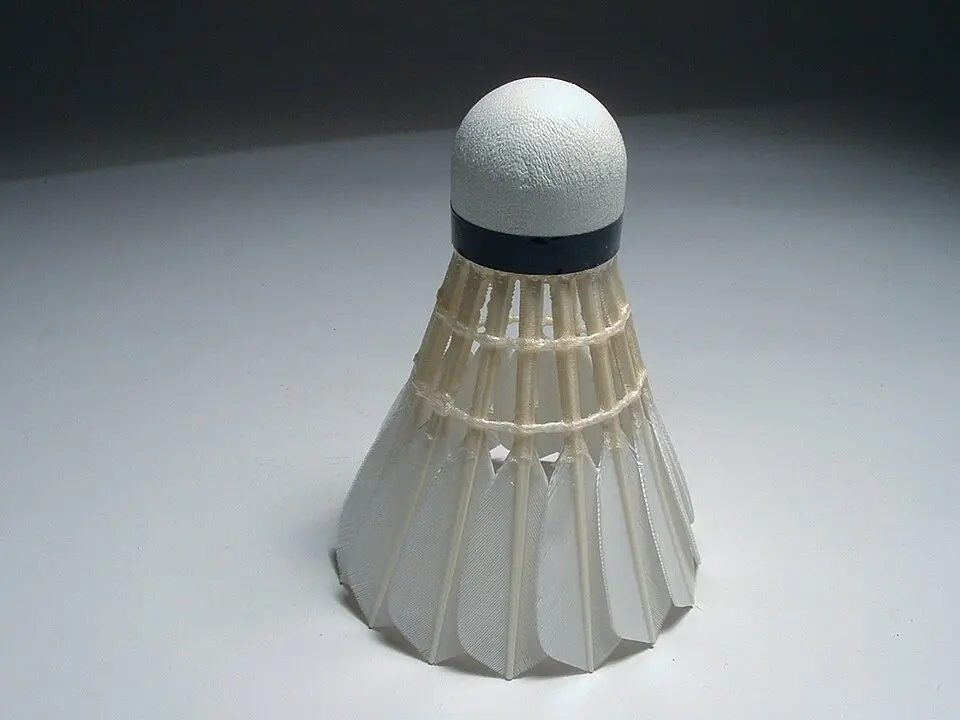
The thing badminton players hit back and forth is properly called a shuttlecock, or just a shuttle (Americans often say “birdie”). With its rounded cork base and crown of white feathers, it looks like nothing used in any other ball sport.
Have you ever counted the feathers on one? It turns out there are precise rules and painstaking habits behind it all, right down to which bird, which wing and which feathers are used.
Sixteen feathers, about five grams
Under the rules of the Badminton World Federation (BWF), a feathered shuttle must have 16 feathers fixed into a cork base. Each feather is 62 to 70 millimeters (about 2.5 to 2.75 inches) long, and all the feathers in a single shuttle must be the same length. Their tips form a circle 58 to 68 millimeters across, the cork base measures 25 to 28 millimeters in diameter, and the whole thing weighs just 4.74 to 5.50 grams, roughly the weight of a US nickel.
The feathers come from waterfowl, geese or ducks. Goose feathers are considered tougher, and the high-end shuttles used in competition are made from them.

Never mix left and right
Choosing the feathers is the crucial part of making a shuttle. Only seven flight feathers from each wing are said to be usable: the 4th through the 10th, counting from the wingtip when the wing is spread. That gives 14 per goose, left and right combined.
But feathers from the right wing and the left wing cannot be mixed. The two wings’ feathers curve in opposite directions, so a mixed shuttle would not spin and fly cleanly. With only seven usable feathers per wing and 16 needed, every shuttle requires the wings of at least three birds.
For the top-grade shuttles used at international tournaments, the selection is stricter still. Yonex, the Japanese maker whose shuttles have been used at the Olympics, sorts feathers into fine grades by how they bend and twist and takes only about two from each wing for its top model. Do the math, and as many as eight geese go into a single shuttle.
The fastest start, the quickest stop
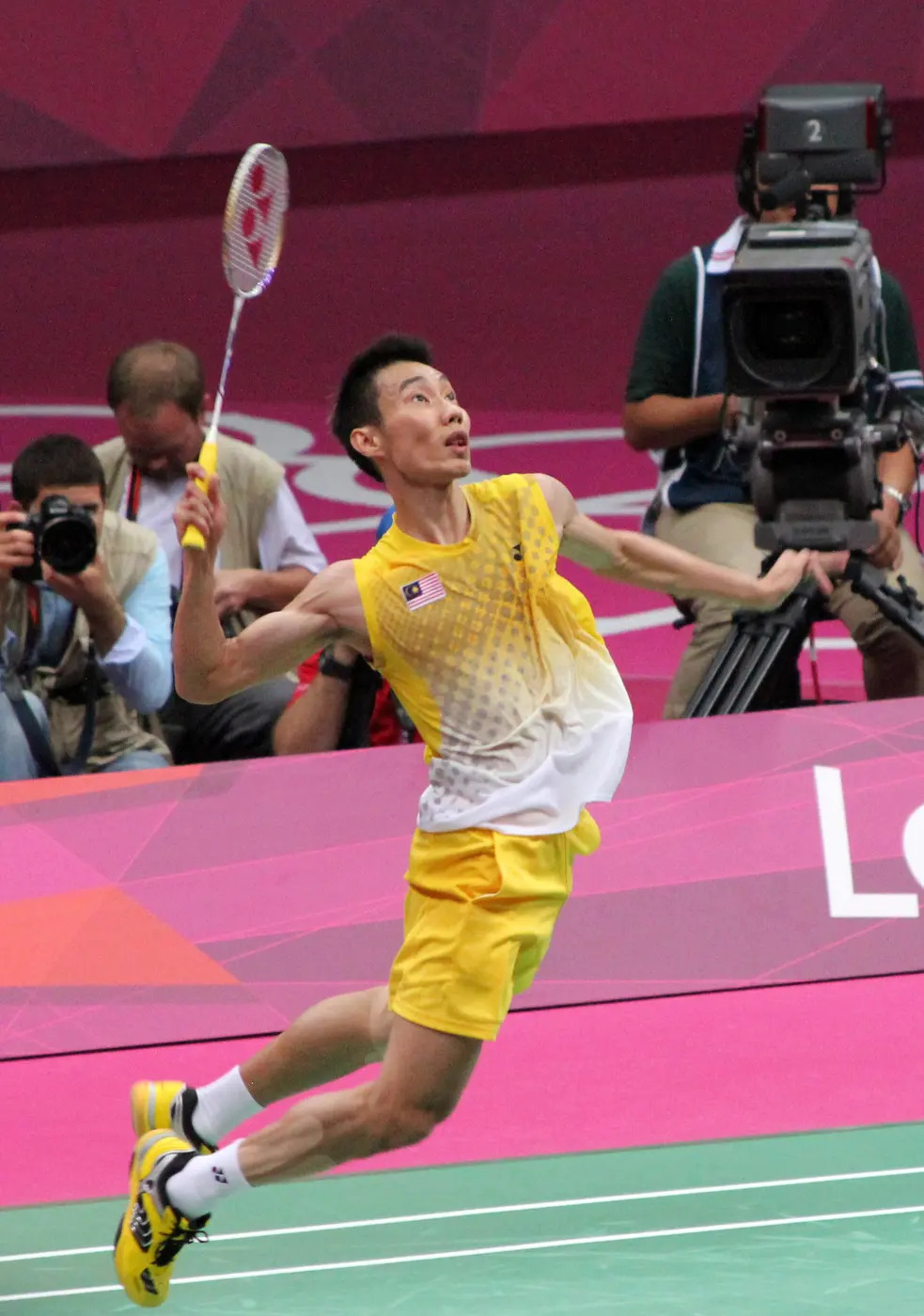
Straight off the racket, a shuttle travels astonishingly fast. In April 2023, India’s Satwiksairaj Rankireddy hit a smash measured at 565 km/h (351 mph) in a gym at Yonex’s factory in Soka, near Tokyo, a feat certified by Guinness World Records. That is more than twice the 263 km/h of the fastest tennis serve on record.
But because the feathers catch so much air, the shuttle slows down almost immediately. However hard you hit it, it is moving far more slowly by the time it reaches the other side. The shuttle also tends to fly with its cork in front and the feathers trailing, so no matter which way it is struck, it quickly flips around and heads off cork first. The feathers are responsible both for its speed and for its peculiar flight.

Running short of feathers
Those feathers are now in short supply. Most come from geese and ducks raised for food in China, and outbreaks of bird flu and changing demand for meat have cut the supply. According to the China Animal Agriculture Association, duck and goose production in 2024 was nearly 10% lower than in 2019. Meanwhile, more and more people are playing badminton around the world, and shuttle prices keep climbing.
Against that backdrop, in April 2026 the BWF approved trials of shuttles made with synthetic feathers at some international tournaments. It will start with junior and lower-level events, collecting feedback from players and officials to see whether the synthetic shuttles fly the same way as feathered ones.