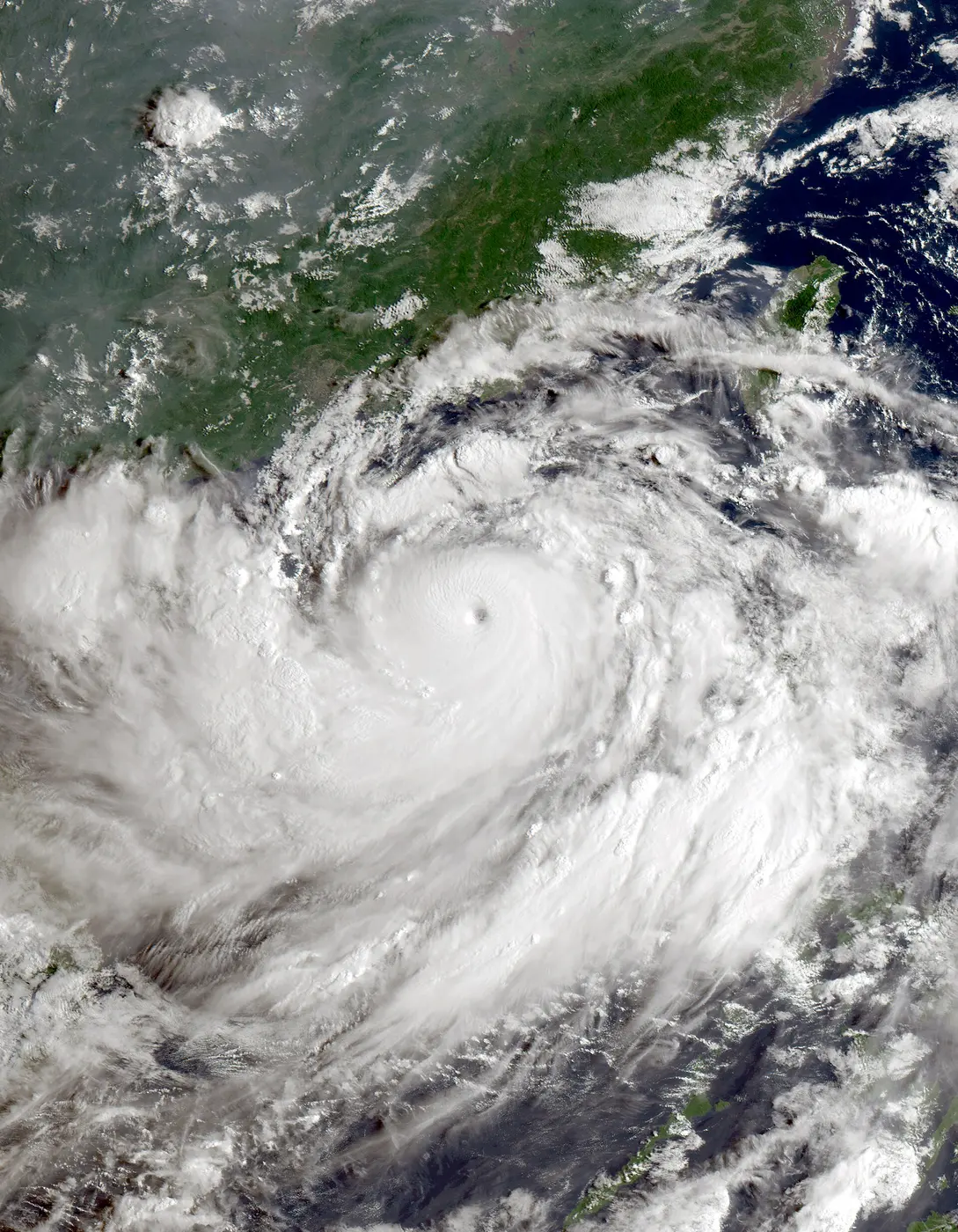
Who names typhoons?
The Typhoon Committee, a body of 14 Asian and Pacific countries and territories, keeps a list of 140 names that are used in turn. Japan’s contributions come from constellations, though at home Japan mostly calls typhoons by number.
140
In October 2019, a typhoon dumped record rain across a wide swath of eastern Japan. In Japan it was called Typhoon No. 19. In the rest of the world it was Typhoon Hagibis. And the following year, the Japan Meteorological Agency (JMA) gave it a third name: the Reiwa 1 East Japan Typhoon.
One storm, three names: a number, an Asian name and a disaster name. Who decides each of them, and how?
Numbers, Japan’s postwar habit
The JMA numbers typhoons in the order they form, starting each year with the first one after January 1. If a typhoon weakens into a tropical depression and then strengthens again, it keeps its original number.
Japan did not always use numbers, though. According to a newsletter of the Japan River Association, after World War II, Japan’s weather service came under US military control, and from May 1947 typhoon forecasts and information followed the US military’s announcements. The Americans kept an alphabetical list of women’s names and assigned them to storms in order. Typhoon Kathleen, which breached the levees of the Tone River in September 1947, and Typhoon Jane, which drove a storm surge into Osaka Bay in 1950, date from this period. In 1953, the year after Japan regained its independence, the English names were dropped in favor of today’s numbers.


The JMA also names typhoons that cause especially severe disasters, such as those that damage around 1,000 or more homes, when it judges that a name will help preserve the lessons for future generations. Examples include the Toya Maru Typhoon of 1954, named for a ferry lost in the storm, and the Isewan (Ise Bay) Typhoon of 1959. After the Okinoerabu Typhoon of 1977, more than 40 years passed before the agency named another, in 2019.
140 names from 14 members
As for international names, the JMA says typhoons used to be given English personal names by the United States. That changed in 2000, when the Typhoon Committee, an intergovernmental body working on typhoon disaster prevention in the western North Pacific and the South China Sea, introduced Asian names. Its 14 members include Japan, China, South Korea, the Philippines, Vietnam, the United States, Hong Kong and Macau.
Each member contributed 10 names, for a total of 140. The first typhoon of 2000 was named Damrey, meaning “elephant” in Khmer, from Cambodia, and since then the names have been used in the order they appear on the list. After the 140th, the list starts again with Damrey. With an average of 25.1 typhoons a year, a full cycle takes five or six years.
According to the JMA, the goals are to respect the cultures of Asian countries and territories and strengthen solidarity among them, and to raise awareness of disaster prevention by using names familiar to people in the region.
Japan reaches for the stars
Japan’s 10 names all come from constellations. The current list includes Koinu (Canis Minor), Tomo (Puppis), Hebi (Serpens), Kajiki (Dorado), Koto (Lyra), Kujira (Cetus), Koguma (Ursa Minor), Tokei (Horologium), Tokage (Lacerta) and Yamaneko (Lynx).
The JMA says constellations were chosen because they are “neutral”: they are not the names of particular people or companies, trademarks, places or weather phenomena. They are natural things unlikely to involve conflicting interests, and they sit in the sky, like typhoons, and are familiar to people. Names must also be no longer than nine letters, easy to pronounce and free of offensive meanings in the other members’ languages.
Retired after disasters
Names on the list are reused, but when a typhoon causes a major disaster, its name may be replaced at the request of a member country or territory.
Japan’s names have been swapped out many times. Washi (the eagle, Aquila), the name of a typhoon that caused heavy damage in the Philippines and elsewhere in 2011, was replaced by Hato (the dove, Columba), and Hato itself gave way to Yamaneko after a 2017 typhoon. Tembin (the scales, Libra), also from 2017, became Koinu, and Yagi (Capricornus) and Usagi (Lepus), both from 2024, were replaced by Tomo and Hebi. Koppu, Kammuri and Kompasu were likewise replaced by Koguma, Koto and Tokei. Of the 10 names Japan had on the list in 2011, only Kajiki, Kujira and Tokage remain.