Why are tennis balls yellow?
Because they show up better on television. As color broadcasting spread, the International Tennis Federation added yellow balls to the rules in 1972.
Ask someone to picture a tennis ball and they will almost certainly see yellow. On a public court or on the grass at Wimbledon, the ball is the same eye-catching color.
But tennis has been played for about 150 years, and its balls have been yellow for only the last 50 or so. Before that, white was the norm. What changed the color was not the players or the rule makers. It was television.
White or black, depending on the court
Modern tennis, properly called lawn tennis, was developed in Britain in the 1870s from the much older indoor game now known as real tennis. According to the International Tennis Federation (ITF), real tennis balls were traditionally made of a leather or cloth envelope stuffed with rags, horsehair or similar material. Lawn tennis balls, by contrast, were made of rubber from the start, thanks to vulcanization, the process for toughening rubber invented by the American Charles Goodyear.
The first balls were bare rubber. Players soon found that wrapping them in stitched flannel made them wear and play better. Later the core was made hollow and pressurized with gas, the flannel gave way to a purpose-made woolen cloth called melton, and the stitching was replaced by a seam of vulcanized rubber.
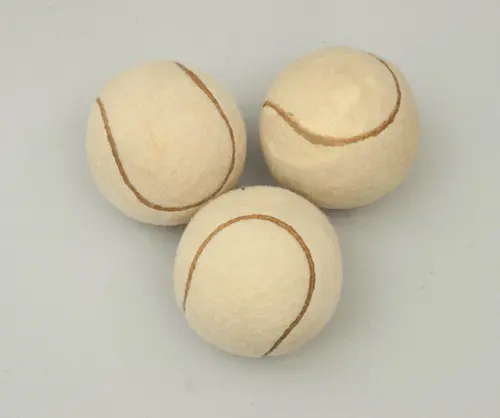

And the color? According to the ITF, balls were historically either black or white, depending on the background color of the court.
Enter color television
On July 1, 1967, the BBC broadcast the Wimbledon Championships in color on BBC Two. It was the start of regular color television in Britain. According to the Coventry Telegraph, the BBC brought the launch forward from December so that it could claim to be the first broadcaster in Europe with a regular color service. Coverage began at 2 p.m. with four hours of live tennis, and the first match shown in color was Cliff Drysdale against Roger Taylor on Centre Court.
The man in charge of BBC Two at the time was David Attenborough, later world famous for his nature documentaries. He announced that, to begin with, the channel would broadcast in color for just five hours a week. Not many people saw that first broadcast in color anyway: there were fewer than 5,000 color sets in Britain.
Over the following years, color sets found their way into more and more homes. Then, in 1972, the ITF added yellow balls to the Rules of Tennis. Its explanation was simple: research had shown that yellow balls were more visible to television viewers. Most tournaments soon followed, but not all of them.
Wimbledon held out until 1986
Wimbledon, the very event that had launched color TV in Britain, went on using traditional white balls. Yellow balls appeared there for the first time in 1986, at the 100th Championships of a tournament first held in 1877. According to the Associated Press, that year’s official Wimbledon compendium said the change was made largely because the white balls were getting stained green on the grass.
In 2024, the All England Club, which runs Wimbledon, named Attenborough as one of the people who had inspired the switch to yellow. On the opening day of that year’s tournament, the 98-year-old watched from the Royal Box on Centre Court, seated next to David Beckham.
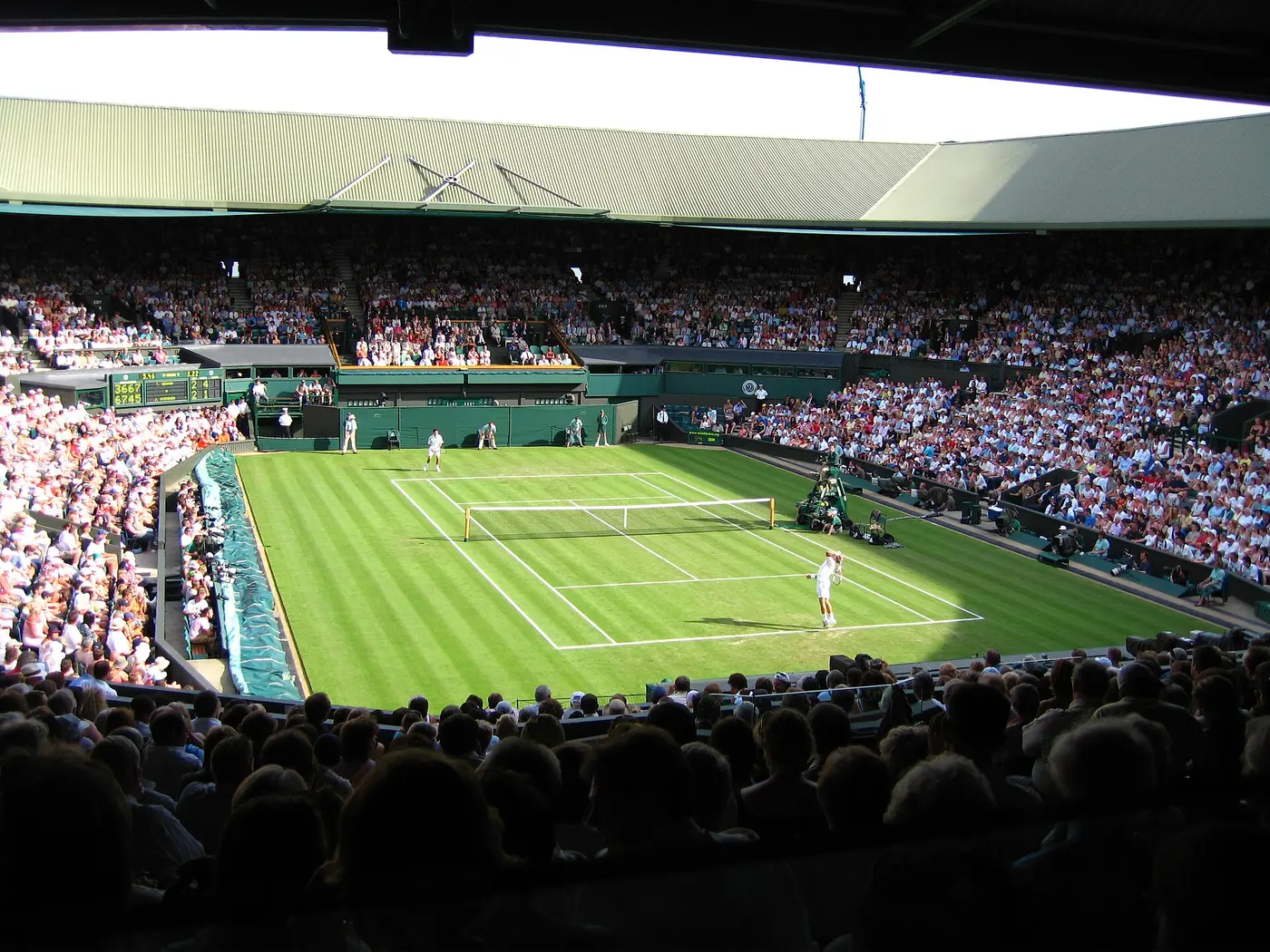

Even today, the ITF’s rules say a ball may be white or yellow, so white balls have never actually been banned. But yellow, easy to see on screen and from the stands alike, has become the color of tennis.