Does the color red make bulls angry?
No. A bull goes for the moving cloth, not its color. The bullfighter’s cloth is red mainly for the benefit of the people watching.
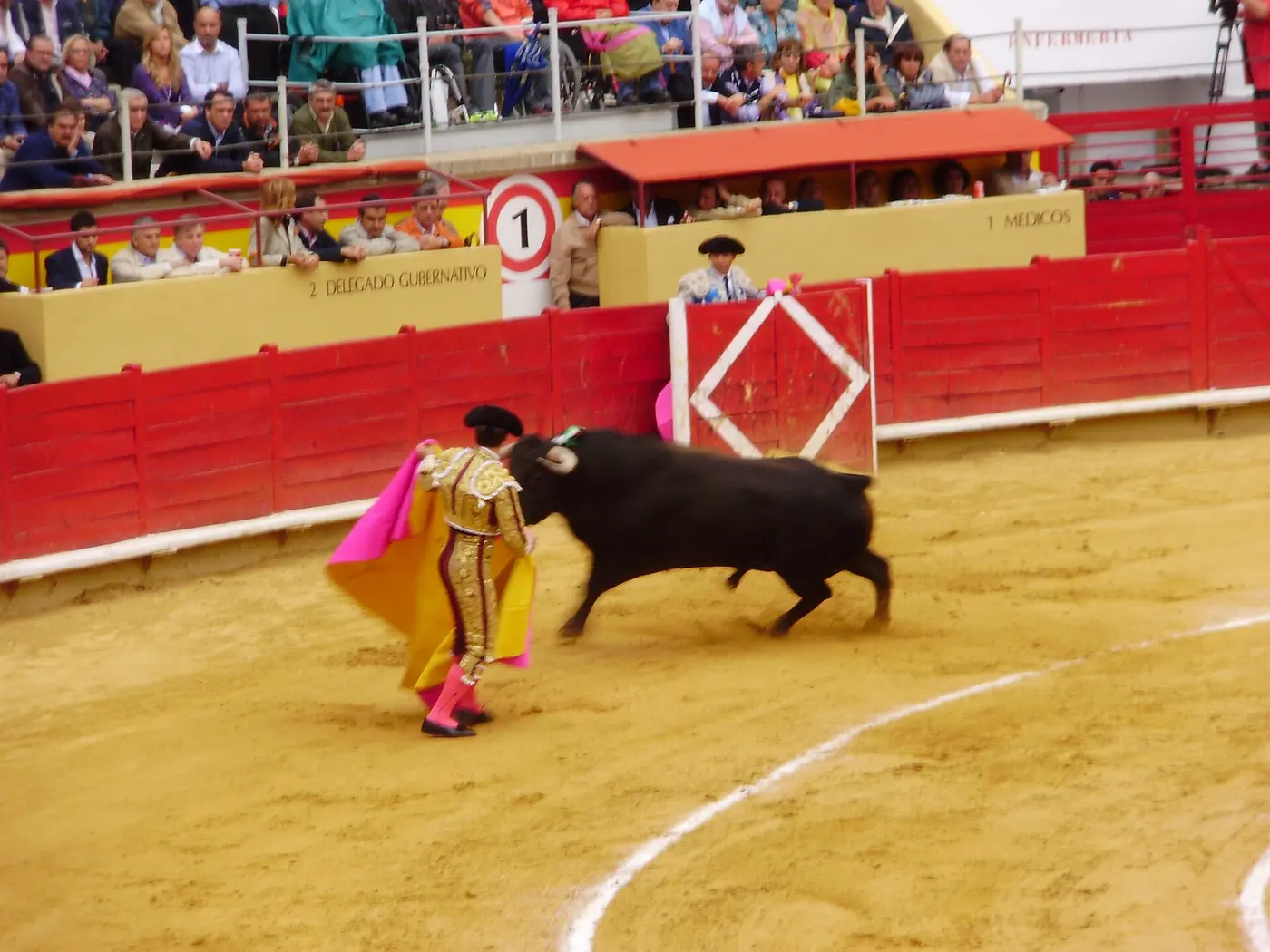
In the middle of the ring, a matador flicks a red cloth, and a black bull lowers its head and charges. That is the picture most people have of a Spanish bullfight, and it has given English a handy phrase: something that is “like a red rag to a bull” is certain to make someone furious.
The bull, however, is not enraged by the color red. What draws it, as far as anyone can tell, is the movement of the cloth. So why do bullfighters bother with red at all?
Two capes, two colors
In a Spanish bullfight, the bullfighters work with two kinds of cloth. When the bull first enters the ring, it is met with the capote, a large cape. After the mounted picadors and the banderilleros have had their turns, the matador returns for the final stage carrying the muleta, a smaller red cloth draped over a stick.
The capote is not red. Japanese encyclopedias describe it as pink, and the science news site Live Science notes that it is magenta on one side and gold or blue on the other. Yet bulls charge the capote just as furiously as they charge the red muleta. If a bull will rush at pink and yellow, red can hardly be the trigger.

What does a bull see?
Cattle color vision has been measured. In 1998, Gerald Jacobs and his colleagues at the University of California, Santa Barbara, recorded how the retinas of cattle, goats and sheep respond to light and found only two kinds of cone, the cells that detect color. One responds best to blue-violet light and the other to yellow-green. People have three. Like most mammals, then, cattle are dichromats, and red is unlikely to look as vivid to them as it does to us.
Saying that bulls “can’t see red” goes too far, though. In a study published in 2001, Clive Phillips and a colleague at the University of Cambridge trained calves to tell apart red, green and blue lights that had been matched for brightness. The calves could pick out red light from blue and from green, choosing correctly 82 and 89 percent of the time on average, but they struggled to tell blue from green. Red may well look different to cattle. Looking different, however, is not the same as provoking rage.
The MythBusters test
So which matters more, color or motion? The American TV show MythBusters put the question to the test in 2007. According to Live Science, the team ran three experiments with a live bull.
First, they set up red, blue and white flags that did not move. The bull charged all three, regardless of color. Next, they placed three dummies dressed in red, blue and white in the ring. Again the bull went after all of them, and it actually charged the red one last. Finally, a person dressed in red stood perfectly still while two cowboys, not wearing red, moved around the ring. The bull chased the moving cowboys and left the motionless figure in red alone.
So why is the muleta red?
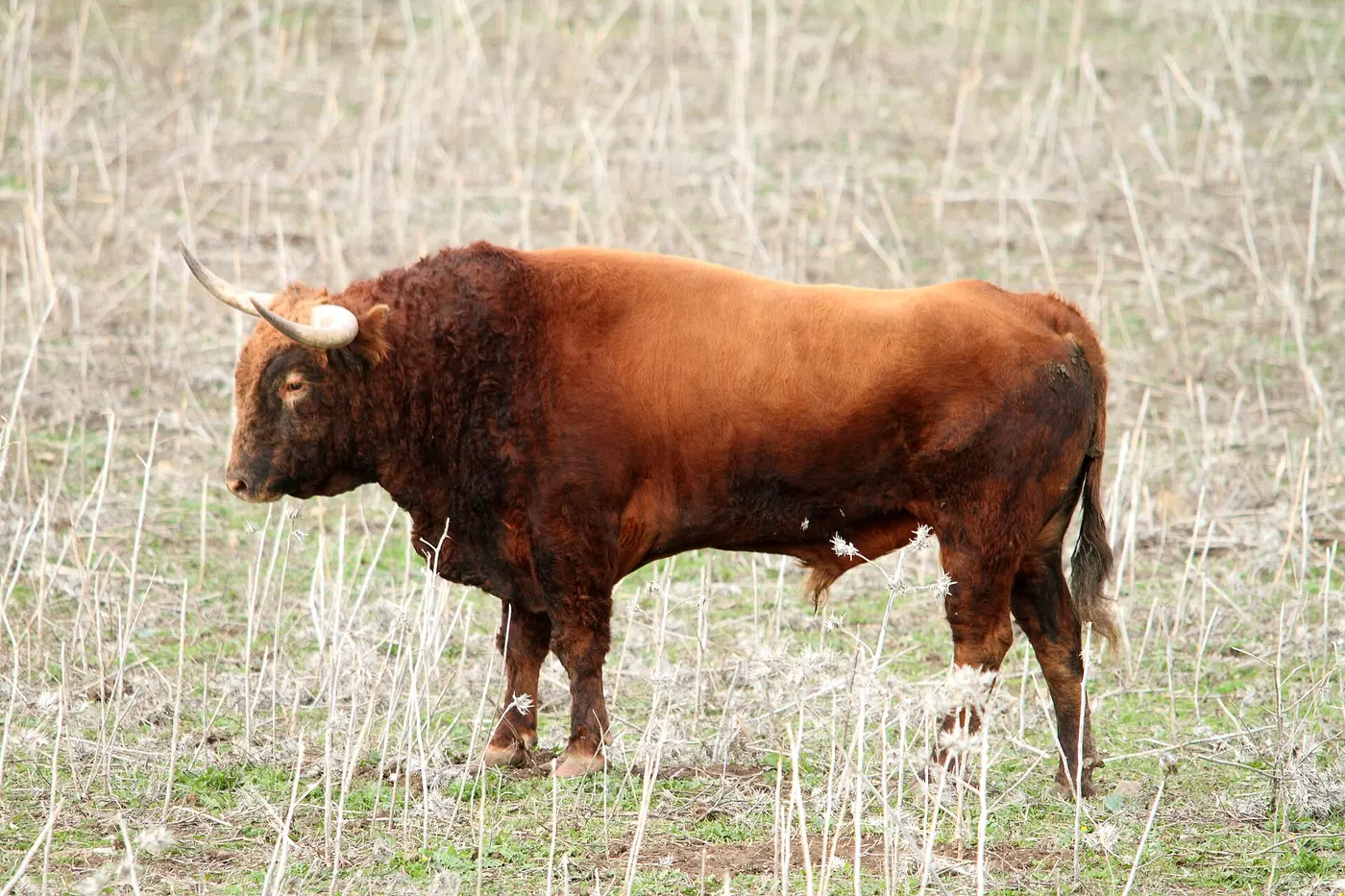
Fighting bulls are no ordinary cattle. The Japanese edition of the Britannica encyclopedia explains that they come from pedigreed stock raised on special ranches, and that the young animals with the most fighting spirit are the ones chosen. They are, in other words, animals inclined to go for whatever moves. The matador’s skill lies in steering those horns toward the moving cloth rather than toward his own body.

The most common explanation for the muleta’s color is that it hides the bull’s blood during the final stage of the fight. Juan Antonio Leñero, a researcher at the Institute of Microelectronics of Seville, wrote in a 2016 piece for the Spanish news site elDiario.es that red has traditionally been used because it hides stains and looks striking to the audience, and that a green or blue cape would probably have the same effect on the bull. The red, it seems, is for the people in the stands.